
Why Marine Hardware Fails: Load, Corrosion, Vibration, and Poor Installation
Marine hardware rarely fails for just one reason. A loose cleat, worn hinge, unstable rod holder, rattling ladder, or moving grab handle is usually the result of load, vibration, corrosion, water intrusion, poor installation, weak fasteners, or missed inspections working together over time.
Boat owners often notice the visible symptom first: a fitting moves, a screw backs out, a hinge squeaks, a ladder rattles, or rust-colored staining appears around a fastener. The important question is not only what looks wrong, but why it started. Understanding the main causes of marine hardware failure helps you decide whether the part needs tightening, resealing, reinforcement, repair, or replacement.
Why Boat Hardware Failure Starts at the Mounting Point
Most deck hardware is only as reliable as the structure and fasteners behind it. A stainless steel cleat, grab handle, hinge, rod holder, or ladder bracket can be strong on its own, but it still depends on the mounting surface, backing support, fasteners, sealant, and surrounding deck condition.
Real boats move. Hulls flex. Engines vibrate. Waves create shock loads. Dock lines pull from changing angles. Anglers lean on rod holders. Passengers grab handrails suddenly. Swim ladders are loaded by people climbing aboard while the boat is moving. These forces are not the same as a static test on a workbench.
Hardware failure often begins when small movement is allowed at the base. Once a fitting moves, fastener holes can enlarge, sealant can break, water can enter, and corrosion can start around hidden surfaces. The earlier these signs are caught, the easier the repair is likely to be.
How Load Stress Causes Hardware Failure
Load stress matters most on hardware that restrains the boat, supports a person, or carries force from equipment. Cleats, bollards, handrails, grab handles, ladders, rod holders under load, and anchor-related fittings should not be treated as cosmetic accessories.
A cleat may see steady mooring load, sudden shock from wake, side load from a spring line, or twisting force from a poor line angle. If the cleat is mounted with undersized fasteners, no backing plate, or a weak deck surface, the problem may first appear as slight movement around the base. Over time, that movement can damage the holes and surrounding laminate.
Ladders and grab handles create a different kind of risk. A person boarding from the water or grabbing a handle to regain balance can apply sudden, uneven force. If the hardware is mounted into a thin panel, wet core, or unsupported surface, the fasteners may loosen or the surface may crack. For safety-related hardware, professional inspection is appropriate when the structure, backing, or previous installation quality is uncertain.
Corrosion, Pitting, and Material Breakdown
Corrosion is one cause of hardware failure, but it is not the only one. Marine hardware is exposed to salt deposits, freshwater minerals, trapped moisture, deck cleaners, fuel residue, bait residue, poor drainage, and mixed-metal contact. Stainless steel is corrosion-resistant, not corrosion-proof. Even suitable stainless hardware can stain, pit, or develop crevice corrosion when salt and moisture remain trapped around fasteners or under hardware bases.
Rust-colored tea staining is often an early visual sign, especially around fastener heads, washers, hinge barrels, and hardware bases. Light staining may be cleanable, but it should still prompt inspection. Pitting, cracks, seized fasteners, metal loss, or hardware movement are more serious and may indicate that cleaning alone is not enough.
Mixed metals can also contribute to failure. Stainless fasteners installed directly into aluminum or other dissimilar metals in wet conditions may create galvanic corrosion risk. The risk increases where saltwater acts as an electrolyte, drainage is poor, or protective coatings are damaged. In those cases, isolation, suitable compounds, correct material selection, and routine inspection become more important.
Vibration and Repeated Movement
Vibration is a common reason boat accessories loosen over time. Engines, hull movement, wave impact, trailering, and repeated use can gradually work fasteners loose, especially where no locking method was used or the mounting surface has already been compressed.
Hinges are a common example. A hatch hinge may open and close hundreds of times, vibrate underway, and carry load from a misaligned hatch. Once the hinge begins moving against the panel, screw holes can enlarge and the hinge may no longer sit flat.
Rod holders can also loosen from repeated movement. Even if the holder is not overloaded, small twisting forces from rods, tackle, trolling, or passengers leaning on the fitting can gradually stress the fasteners. If the base moves even slightly, the sealant may separate and water can enter the mounting holes.
Poor Installation and Weak Fasteners
Many hardware failures begin during installation. Common causes include fasteners that are too short, wrong thread type, undersized washers, missing lock nuts, no backing plate, poor hole preparation, overtightening, poor sealant coverage, or mounting into a surface that was never intended to carry the load.
Before drilling or enlarging holes, check behind the mounting area for hidden wiring, fuel lines, tanks, plumbing, steering cables, deck core, and structural elements. Dry-fit the hardware first. Confirm fastener length, washer clearance, underside access, nut engagement, backing plate position, and tool access.
For load-bearing fittings, through-bolting with suitable washers, lock nuts, and backing support is often more appropriate than relying on screws alone. Screws may be acceptable for light-duty trim or small covers, but they should not be assumed suitable for cleats, handrails, ladders, or rod holders that may carry real load.
Backing Plates and Support
A backing plate spreads load over a wider area below the deck or panel. Without backing, force may be concentrated around individual fastener holes. That can lead to cracking, crushed laminate, enlarged holes, and hardware that starts to move under load.
Large washers can help spread clamping pressure, but they are not the same as a proper backing plate on high-load hardware. Cleats, handrails, ladders, and loaded rod holders often need more support than small washers provide, especially on thin fiberglass, cored decks, hatch lids, and molded liners.
The backing plate must also sit against sound material. If the underside is uneven, wet, cracked, or delaminated, adding a backing plate may not solve the underlying problem. The structure itself may need repair before the hardware can be trusted.
Sealant Failure and Water Intrusion
Sealant protects the joint around fasteners and hardware bases, but it does not last forever. Movement, UV exposure, poor surface preparation, overtightening, and age can break the seal. Once water enters a fastener hole, the damage may stay hidden until the hardware becomes loose or the deck softens.
Cored decks need particular care. If water reaches a wood, foam, or composite core, the surface may still look acceptable while the material below weakens. Warning signs can include brown staining, soft spots, fasteners that no longer tighten, cracking around the fitting, or moisture appearing when hardware is removed.
Resealing is useful only when the hardware, fasteners, deck surface, and core are still sound. If the surface is soft, fastener holes are enlarged, or the hardware has been moving for some time, the repair may require drying, filling, reinforcement, recoring, or replacement rather than simply adding more sealant.
Failure Cause, Warning Sign, and Prevention
| Failure Cause | Warning Sign | Prevention or Next Step |
|---|---|---|
| Excess load or shock load | Cleat, handrail, ladder, or rod holder moves under pressure | Inspect fasteners, deck condition, backing support, and load path before continued use |
| Weak or missing backing plate | Cracks around fastener holes, crushed surface, or hardware base lifting | Add suitable backing only if the structure is sound; repair damaged laminate or core first |
| Loose or incorrect fasteners | Screws backing out, nuts loose, enlarged holes, uneven hardware base | Use correct fasteners, washers, lock nuts, and thread engagement for the installation |
| Vibration and repeated movement | Rattling ladders, worn hinges, moving grab handles, noisy fittings underway | Check alignment, fastener tightness, locking method, hinge wear, and mounting surface condition |
| Failed sealant | Water stains, damp core, cracked bedding, leaks around fasteners | Remove hardware, inspect the deck, clean surfaces, and reseal only after confirming the structure is sound |
| Corrosion or pitting | Tea staining, pits, rough metal, rust-colored marks, seized fasteners | Clean light staining, inspect pitting carefully, and replace questionable hardware or fasteners |
| Mixed metals | Corrosion near aluminum, plated parts, or dissimilar metal contact | Review material compatibility, isolation, drainage, and protective compounds where appropriate |
| Lack of inspection | Small movement becomes a larger repair or sudden failure | Inspect high-load hardware regularly and after heavy weather, towing, docking incidents, or hard use |
Examples by Hardware Type
Loose cleats should be treated seriously. A cleat that moves by hand, lifts at one end, shows cracking around the base, or leaks around fasteners should not be ignored. Hardware such as stainless steel boat cleats needs a sound deck, suitable fasteners, and proper backing because it may experience sudden line loads.
Worn hinges often show up as rattling, sagging, binding, or screw movement. Hinges on hatches and lockers can wear faster when panels are misaligned or used as steps or handholds. When replacing boat hinges, inspect the holes and panel condition before installing new fasteners into the same locations.
Unstable rod holders may indicate that the mounting surface is flexing, the fasteners are loose, or the holder is being used beyond the support provided by the installation. Trolling, heavy tackle, and angled rod loads can put twisting stress into the base. Rod holders and accessories should be mounted with the expected fishing load and gunwale structure in mind.
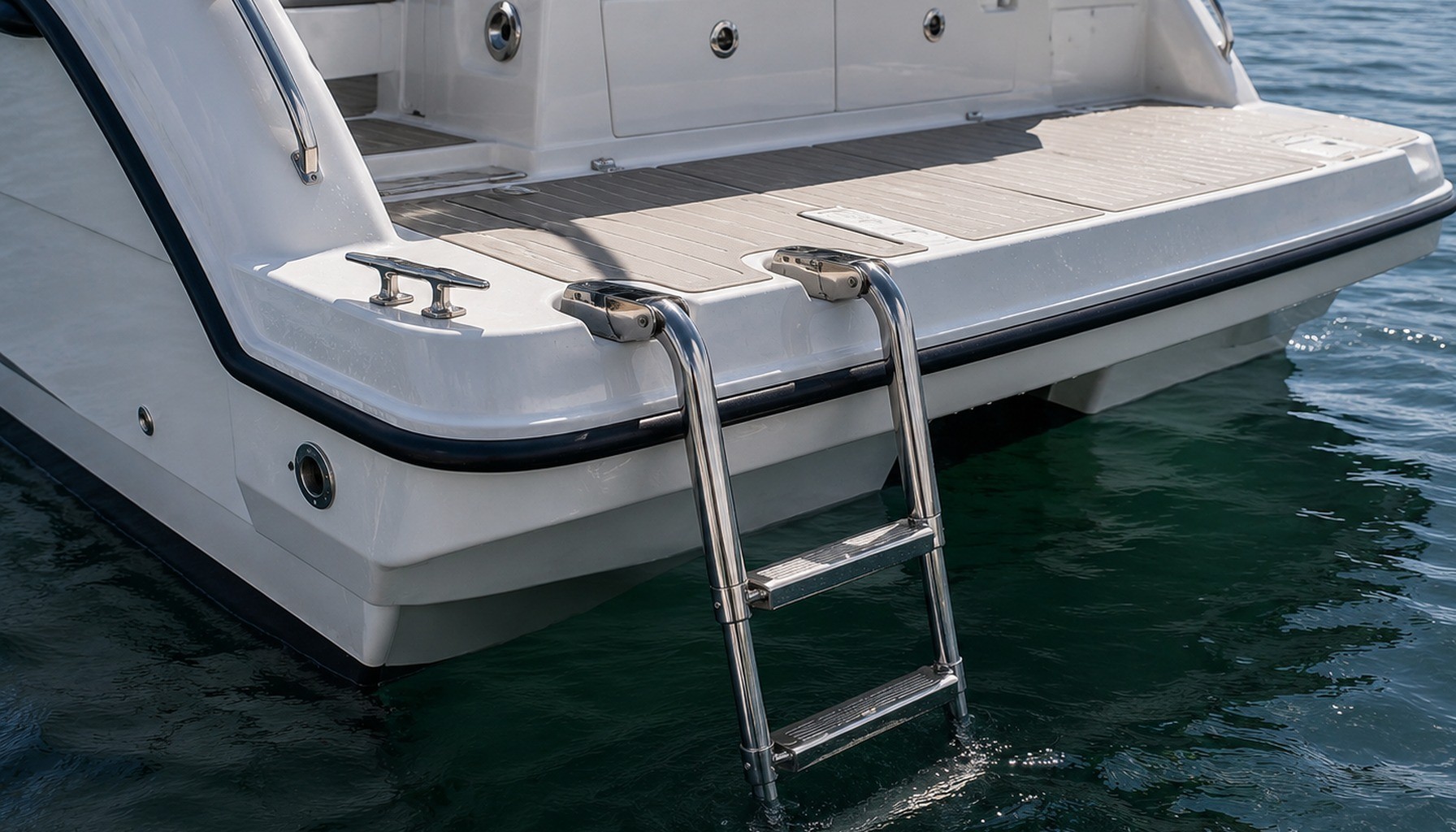
Rattling ladders may be caused by loose brackets, worn pivots, missing hardware, flexing mounts, or fasteners working loose. Because ladders support people, movement should be inspected before the ladder is used again. Pay attention to the swim platform, transom, bracket bolts, and underside access.
Moving grab handles or handrails are safety warning signs. If a handle shifts under hand pressure, the problem may involve loose fasteners, weak backing, cracked laminate, or a poor previous repair. Do not rely on appearance alone. If the fitting may be used to prevent a fall, the installation needs careful inspection.
When to Tighten, Reseal, Repair, or Replace
Tightening may be appropriate when the hardware is otherwise sound, the fasteners are correct, the holes are not enlarged, and the mounting surface is dry and firm. Tighten evenly and avoid crushing the deck or stripping threads.
If the same fitting loosens again after tightening, treat that as a warning sign rather than a routine maintenance item. Repeated loosening can point to enlarged holes, crushed laminate, missing backing, poor fastener engagement, or movement in the hardware itself.
Resealing may be appropriate when the bedding has aged or separated but the hardware, fasteners, holes, and deck structure remain sound. The fitting should usually be removed, cleaned, inspected, and rebedded rather than sealed only around the outside edge.
Repair is needed when holes are enlarged, the deck is cracked, the core is damp, the panel is crushed, or the hardware has been moving under load. Repair may involve filling holes, rebuilding the surface, improving backing, or correcting the load path.
Replacement is the safer choice when hardware is cracked, bent, deeply pitted, severely worn, seized, or no longer holds alignment. For high-load or safety-critical mounting points, professional inspection is appropriate if there is any doubt about the structure or previous installation.
Inspection Routine for Boat Hardware
Inspect high-load hardware before the season, after heavy weather, after a hard docking event, and any time movement or staining appears. Boats used in saltwater, rough water, fishing, charter work, or frequent trailering may need closer inspection than lightly used freshwater boats.
Check the hardware by looking and feeling. Try to detect movement at the base, not just loose screws on the surface. Look for cracked sealant, brown staining, green or white corrosion products near mixed metals, missing washers, bent fasteners, elongated holes, worn hinge pins, and deck softness around the fitting.
Clean exposed stainless hardware with fresh water where practical, especially after saltwater use. Mild soap and water are usually enough for routine cleaning. Avoid steel wool, carbon steel brushes, bleach, and aggressive chloride-heavy cleaners, because they can damage or contaminate stainless surfaces.
FAQ
Why do boat cleats become loose?
Boat cleats usually become loose because of line loads, shock loads, weak fasteners, insufficient backing, water intrusion, or deck damage around the mounting holes. A loose cleat should be inspected before further use, especially if it is used for mooring or towing loads.
Why do marine hinges wear out?
Marine hinges wear from repeated movement, vibration, misalignment, corrosion, and load on the hatch or panel. If the hinge screws are loose or the holes are enlarged, replacing the hinge alone may not solve the problem.
Can vibration damage boat accessories?
Yes. Engine vibration, hull movement, wave impact, and trailering can loosen fasteners, wear hinge pins, enlarge holes, and cause rattling. Accessories exposed to repeated movement should be checked for tightness, alignment, and surface damage.
How often should boat hardware be inspected?
Inspect important hardware at the start of the season, during routine cleaning, and after heavy loads, rough weather, docking impacts, or long trailering trips. Cleats, ladders, handrails, rod holders, and anchor-related hardware deserve closer attention than light trim.
When is loose hardware unsafe?
Loose hardware is unsafe when it supports people, restrains the boat, carries fishing load, or may be grabbed for balance. Moving cleats, ladders, handrails, grab handles, and loaded rod holders should be inspected and repaired before continued use.
Should I replace corroded hardware or clean it?
Light surface staining may be cleanable, but pitting, cracks, seized fasteners, metal loss, or movement around the base require closer inspection. If the hardware is load-bearing or safety-related, replacement or professional evaluation may be safer than cleaning alone.
Final Thoughts
Marine hardware failure is usually the result of load, vibration, corrosion, water intrusion, weak fasteners, poor backing, or missed inspections. The visible fitting may be the part you notice first, but the cause is often hidden at the fasteners, deck surface, sealant line, or backing structure.
Do not ignore early warning signs such as movement, rattling, staining, cracked bedding, loose screws, enlarged holes, or soft deck areas. Tighten only when the structure is sound. Reseal only after proper inspection. Repair damaged mounting surfaces before reinstalling hardware. Replace hardware that is worn, cracked, pitted, or no longer secure. Careful inspection helps protect both the accessory and the boat around it.
Related Nove Sea Categories
Related products
-

SLT 13-1/2" Stainless Steel Steering Wheel with Black PC Cap
Price: $271.00This five-spoke steering wheel is made from polished 304 stainless steel and... -

HMI 13-1/2" Stainless Steel 9-Spoke Steering Wheel
Price: $122.00Add precision and style to your boat's helm with the HMI 13-1/2" Stainless... -

HMI 15.75" 8 Spoke 316 Stainless Steel Boat Steering Wheel with Cap
Old price: $324.00 Price: $291.60 Discount: 10% Save up: -$32.40Upgrade your boat’s helm with this classic 8-spoke marine steering wheel,... -

HMI 13.5" 3 Spoke 316 Stainless Steel Boat Steering Wheel with Knob
Price: $167.00Upgrade your helm with this premium-grade stainless steel boat steering... -

SLT 13.5" Stainless Steel Spike Design Sports Steering Wheel with Hand Grip
Price: $464.00A sleek and robust steering solution for marine enthusiasts, delivering both... -

HMI 13.5" Stainless Steel 3-Spoke Steering Wheel with Black Foam Grip
Price: $226.00This 13.5" (343 mm) steering wheel features a 3-spoke design with a durable... -

HMI 4-Step Telescoping Boat Ladder 316 Stainless Steel Inboard Rail Dock Swimming Ladder
Price: $438.00This 4-step telescoping ladder is designed for secure and convenient boarding... -

HMI 4-Step 316 Stainless Steel Telescoping Under Platform Boat Ladder
Price: $267.00This 4-step telescoping ladder is designed for secure and convenient boarding... -

HMI 4-Step 316 Stainless Steel Telescoping Boat Ladder for Marine or Yacht Platform
Price: $229.00This 4-step telescoping ladder is built from high-quality 316 stainless... -
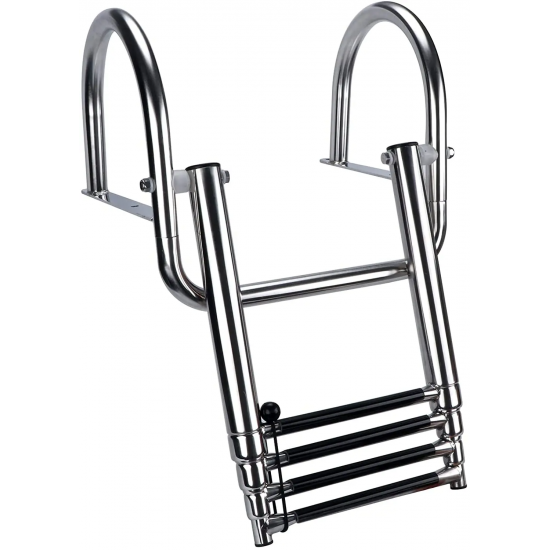
HMI 316 Stainless Steel Telescoping Boat Ladder with Handrail
Old price: $304.00 Price: $273.60 Discount: 10% Save up: -$30.40Step aboard with confidence using this premium-grade telescoping ladder,... -

HMI Stainless Steel Triple Adjustable Rod Holder for Boat Mounting
Price: $206.00Built for serious anglers, the HMI Triple Rod Holder delivers strength,... -

HMI 316 Stainless Steel Boat Fishing Rod Holder Rack
Old price: $138.00 Price: $124.20 Discount: 10% Save up: -$13.80Secure your gear with this premium fishing rod holder rack, crafted from... -

HMI 316 Stainless Steel 5-Tube Adjustable Boat Fishing Rocket Launcher Rod Holder
Old price: $442.00 Price: $397.80 Discount: 10% Save up: -$44.20Optimize your boat's fishing setup with this premium 5-tube rocket launcher... -

HMI 2 Pieces 316 Stainless Steel Fishing Rod Holders with Clamp
Price: $110.00This set includes two adjustable rod holders designed for boat railings with...