
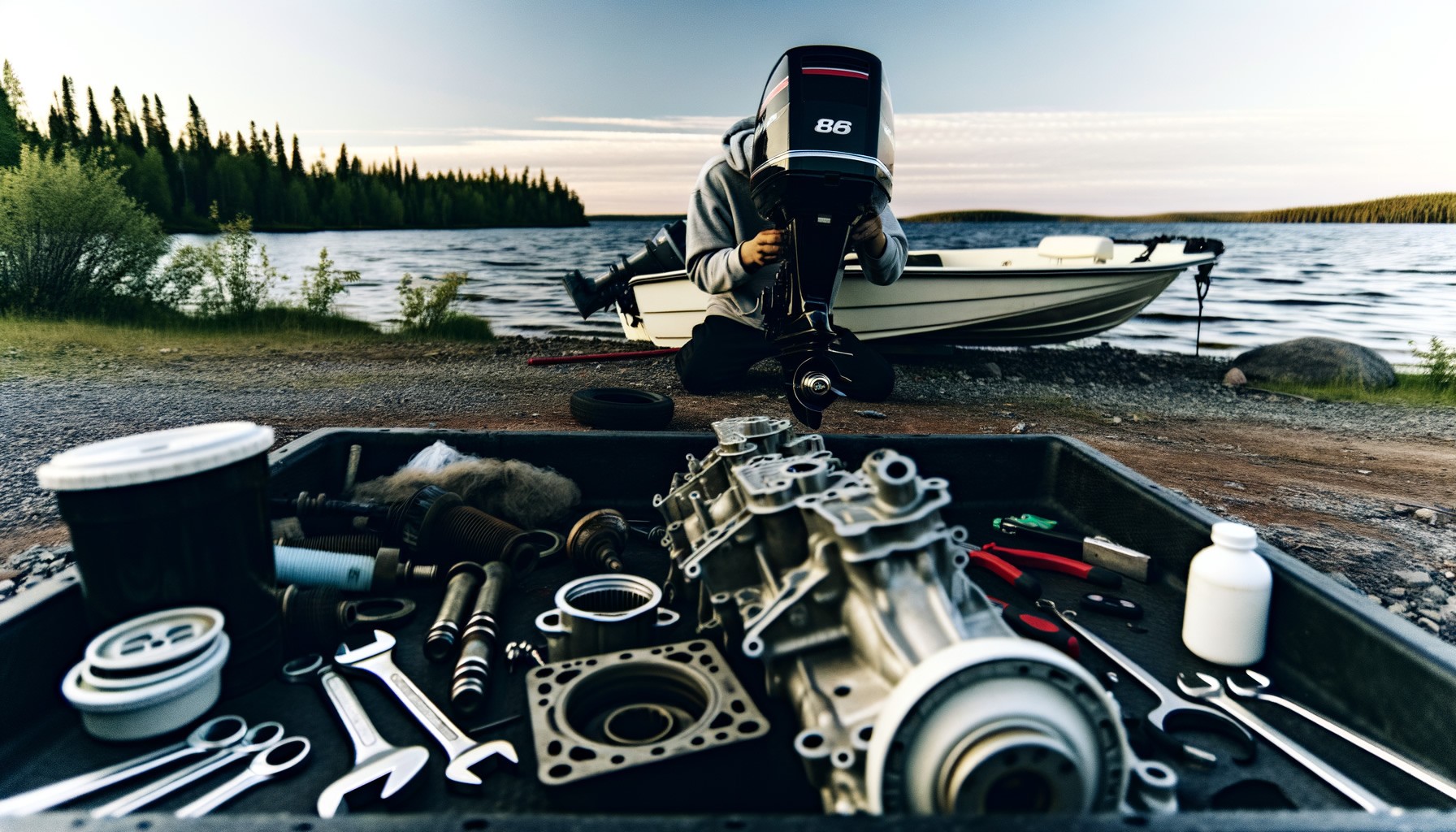
How to Maintain Your Outboard Engine
Today we're going to talk a little bit about outboard engine maintenance. We will present some easy-to-follow tips that will ensure proper operation in the long run.
We have already talked about the impeller and the importance of proper outboard engine cooling, but we feel the need to highlight the issue a little more. All manufacturers insist that the impeller be changed at least every 100 hours or once a year. This rotor wears out, breaks, dulls, and loses its elasticity—factors that prevent the proper cooling of the engine and significantly shorten its life.
Another thing you can do to maintain the cooling system is to "flush" the system a bit. Regardless of whether you are boating on salt or fresh water, small impurities can build up and stress the cooling system. Ideally, you should start the engine with clean water "in the barrel" after each trip.
It is more than recommended that you always burn all the fuel in the carburetor before storing the engine for more than 3 weeks. You can do this while flushing, actually running the engine until it "dies" on its own due to lack of fuel.
Once it stops, remove the cover and check the internal fuel line, check the fuel filter, and check for leaks or cracks. Use an engine cleaning spray (after it has cooled down completely) and clean the entire area thoroughly.
After each use, it is very important to check the propeller. It must be checked to see if it has bumped into anything, if it has not come off the shaft (slightly), and if the blades are in good condition. A damaged propeller can cause great damage to the shaft.
Read the article on choosing a propeller and apply the tips there if you need to buy a new propeller.
Change the oil and filters at the manufacturer's recommended intervals. Use special oil for boat engines.
Store it only in the position recommended by the manufacturer!
A clean and well-maintained engine avoids headaches and unnecessary spending on parts with little effort and minimal investment.
Related products
-

SLT 316 Stainless Steel Heavy-Duty Stern Fairlead Anchor Roller
Old price: $552.00 Price: $496.80 Discount: 10% Save up: -$55.20This stern fairlead anchor roller is constructed from polished 316 stainless... -

HMI 316 Stainless Steel Boat Fishing Rod Holder Rack
Old price: $138.00 Price: $124.20 Discount: 10% Save up: -$13.80Secure your gear with this premium fishing rod holder rack, crafted from... -

HMI 316 Stainless Steel 5-Tube Adjustable Boat Fishing Rocket Launcher Rod Holder
Old price: $442.00 Price: $397.80 Discount: 10% Save up: -$44.20Optimize your boat's fishing setup with this premium 5-tube rocket launcher... -

HMI 15.75" 8 Spoke 316 Stainless Steel Boat Steering Wheel with Cap
Old price: $324.00 Price: $291.60 Discount: 10% Save up: -$32.40Upgrade your boat’s helm with this classic 8-spoke marine steering wheel,...