
Marine Grade Stainless Steel: 316 vs 304 Boat Hardware
Choosing between 304 and 316 stainless steel matters because boat hardware does not live in a normal outdoor environment. A cleat, hinge, deck filler, grab handle, or rod holder may be exposed to salt spray, wet lines, vibration, trapped moisture, cleaning chemicals, fish residue, fuel residue, and long periods of deck exposure. Both 304 and 316 stainless steel can look bright and well finished when new, but they do not offer the same resistance to corrosion in marine service.
For freshwater boats, protected interior fittings, and low-exposure hardware, 304 stainless steel may be acceptable. For saltwater boats, coastal boats, exposed deck fittings, and hardware that carries load or is difficult to replace, 316 stainless steel is usually the better choice. The difference is not just cosmetic. It affects how well the fitting resists staining, pitting, crevice corrosion, and long-term deterioration around fasteners and mounting surfaces.
Why Stainless Steel Grade Matters on Boats
Stainless steel is corrosion-resistant because it forms a thin passive oxide layer on its surface. This layer helps protect the metal beneath it. On a boat, that protection is challenged by chloride from saltwater, especially where moisture is trapped and oxygen flow is limited.
Those problem areas are common on marine hardware. Saltwater can sit under a cleat base, around a deck filler flange, inside a hinge knuckle, under a washer, around a fastener head, or at the base of a grab handle. Once salt dries, chloride deposits can remain on the surface even when the hardware looks mostly clean from a distance.
This is why stainless steel grade matters. A polished fitting may look suitable, but appearance alone does not confirm whether it is the right alloy for exposed marine use. The grade, installation method, drainage, sealant condition, backing support, and maintenance routine all affect how the hardware performs over time.
What 304 Stainless Steel Is
304 stainless steel is a common austenitic stainless steel used in many general-purpose applications. It has good corrosion resistance in many environments, can be formed into hardware shapes, and can be polished to a clean finish. In the right boating application, it can perform adequately.
Its limitation is chloride exposure. Saltwater and coastal air contain chlorides that increase the risk of staining, pitting, and localized corrosion. This does not mean 304 stainless steel is always wrong for boats. It means the application must be chosen carefully.
304 stainless steel is more reasonable for freshwater boats, interior cabin hardware, protected locker fittings, low-load accessories, and parts that are easy to rinse and inspect. It is less appropriate for exposed saltwater deck hardware, fittings that trap water, or parts that carry meaningful load.
What 316 Stainless Steel Is
316 stainless steel is also an austenitic stainless steel, but it includes molybdenum. Molybdenum improves resistance to chloride-related corrosion compared with 304. In practical marine terms, that makes 316 stainless steel better suited to saltwater, coastal exposure, wet deck areas, and fittings that may hold salt and moisture around their mounting points.
The improvement is especially useful against localized corrosion. Many marine hardware problems do not begin as uniform corrosion across the whole fitting. They start as small pits, brown staining around fasteners, corrosion under a flange, or damage inside a crevice where saltwater has been trapped.
316 stainless steel is not corrosion-proof. It can still stain, pit, or corrode if neglected, contaminated, installed poorly, or exposed to trapped saltwater for long periods. Its advantage is that it gives exposed marine hardware a stronger corrosion-resistance margin than 304 in chloride-rich conditions.
Comparison Table: 304 vs 316 Stainless Steel for Marine Hardware
| Factor | 304 Stainless Steel | 316 Stainless Steel |
|---|---|---|
| Best suited environment | Freshwater, protected locations, interior hardware, and low-exposure fittings | Saltwater, coastal boats, exposed deck fittings, and chloride-rich environments |
| Chloride resistance | Moderate; more vulnerable to staining and pitting in saltwater | Better; molybdenum improves resistance to chloride attack |
| Typical boat applications | Cabin hardware, protected trim, freshwater fittings, and non-critical accessories | Cleats, deck fillers, hinges, grab handles, rod holders, and exposed deck hardware |
| Appearance when new | Can look bright and polished | Can also look bright and polished |
| Main risk | May stain or pit sooner in saltwater, crevices, or trapped-moisture areas | More resistant, but still requires rinsing, cleaning, and inspection |
| Practical buying decision | Acceptable when exposure is low, load is limited, and inspection is easy | Recommended when salt exposure, load, safety, or replacement difficulty is higher |
When 304 Stainless Steel May Be Acceptable
304 stainless steel may be acceptable when the boat is used mainly in freshwater, the hardware is protected from regular spray, and the part is easy to inspect. It can also be suitable for some interior fittings where condensation is limited and salt deposits are not a normal concern.
— A freshwater locker hinge that stays dry and is inspected regularly may not need the same corrosion resistance as an exposed saltwater hatch hinge.
— A cabin trim piece or low-load interior accessory may be a reasonable 304 stainless application if it is not exposed to salt deposits.
— A trailer boat used mostly in freshwater may tolerate some 304 stainless hardware in protected areas, especially if the boat is rinsed and dried after use.
— A small non-critical fitting that is easy to remove carries less risk than a structural fitting installed through a deck or gunwale.
The key is to match the material to the environment. 304 stainless steel should not be treated as a universal marine hardware material, but it is not automatically unsuitable for every boat application.
When 316 Stainless Steel Is Recommended
316 stainless steel is strongly recommended for saltwater boats, coastal boats, exposed deck fittings, and hardware that may trap moisture. It is also the more sensible choice where hardware carries load, supports a person, secures the boat, or would be difficult to replace after installation.
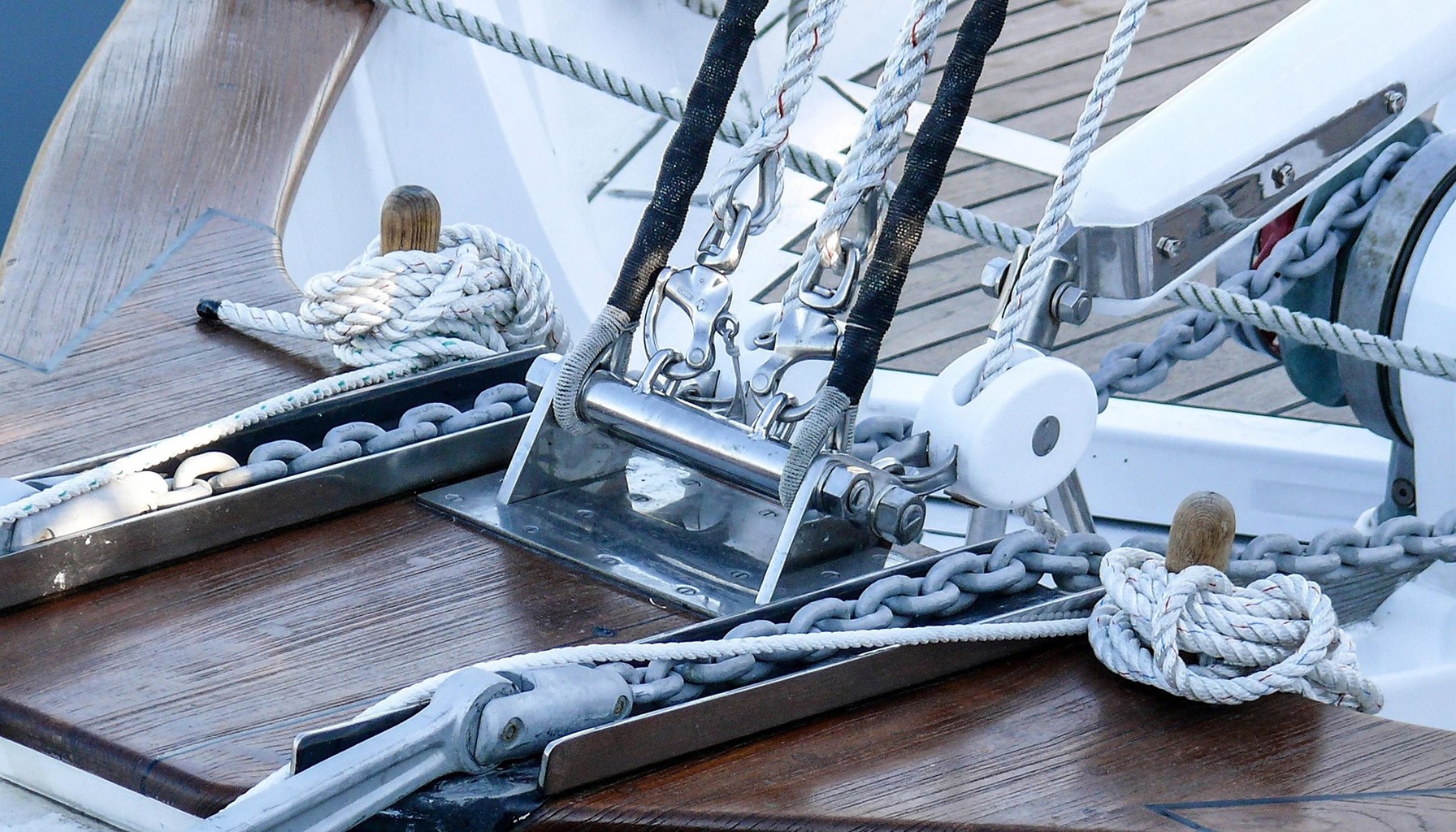
Cleats are a clear example. A cleat can see dock line load, spring line angles, shock from wakes, wet rope, and constant deck exposure. When comparing stainless steel boat cleats, consider the stainless grade together with base footprint, fastener size, deck thickness, backing plates, and access below the mounting surface.
Deck fillers also benefit from 316 stainless steel, especially on saltwater boats. Fuel, water, and waste fill points are exposed to deck wash, spray, residue, and moisture around the cap and flange. When replacing boat deck fillers, check the cap type, hose connection, flange diameter, fastener pattern, and sealant surface before drilling or bedding the fitting.
Rod holders face both corrosion exposure and mechanical load. A fishing rod under drag can apply leverage through the holder into the gunwale, transom, or deck. For exposed installations, 316 stainless steel is usually more appropriate than 304. When selecting boat rod holders and accessories, also consider tube angle, drainage, flange support, backing access, and whether the mounting area can handle the load.
Decision Guide for Boat Owners
| Boat or Hardware Situation | Better Choice | Reason |
|---|---|---|
| Freshwater boat with protected cabin hardware | 304 may be acceptable | Lower chloride exposure and easier inspection reduce corrosion risk |
| Saltwater boat with exposed deck cleats | 316 recommended | Cleats see salt, wet lines, load, and repeated deck exposure |
| Deck filler exposed to spray and washdown | 316 recommended | Moisture and residue can collect around the cap, flange, and fasteners |
| Interior trim or low-load accessory | 304 may be acceptable | Exposure and load are typically lower if the area stays dry |
| Grab handle, handrail, or boarding-area fitting | 316 recommended | Corrosion resistance, secure mounting, and load support all matter |
| Hardware installed through a cored deck | 316 usually preferred | Replacement is more involved, and failed sealing can create hidden moisture problems |
Practical Examples by Hardware Type
Cleats should be treated as load-bearing deck hardware, not decorative trim. On saltwater boats, 316 stainless steel is usually preferred. The installation should use suitable fasteners and backing support where the deck structure requires it. If replacing an old cleat, measure the hole spacing, base footprint, deck thickness, and access below the deck before choosing a replacement.
Hinges are vulnerable because the moving joint can trap salt and moisture. A hatch hinge, locker hinge, or swim platform hinge may look clean outside while corrosion begins around the pin or screw countersinks. In exposed locations, 316 stainless steel is generally the better choice, and the hinge should be rinsed and moved periodically so salt does not remain in the joint.
Deck fillers require both corrosion resistance and careful sealing. If bedding compound fails under the flange, water can sit between the fitting and deck. This can create a crevice corrosion risk and may also allow water into a cored deck. Before drilling or enlarging holes, check below the deck for fuel lines, water hoses, tanks, wiring, structural members, and safe tool access.
Grab handles and handrails should be chosen for corrosion resistance, secure fastening, and the load they may see in real use. A handle may be grabbed suddenly when boarding, climbing from a swim platform, or moving along a side deck in chop. For exposed saltwater areas, 316 stainless steel, correct fasteners, and proper backing are more important than appearance alone. If there is doubt about the deck structure or load path, have the installation inspected by a qualified marine professional.
Rod holders should be evaluated as loaded fittings. Rod movement, drag, vibration, and leverage can stress the holder and the mounting surface. The stainless grade matters, but so do fastener size, backing, drainage, sealant, and the strength of the gunwale, transom, or deck where the holder is installed.
Appearance, Polish, and Corrosion Resistance Are Not the Same
A common mistake is judging stainless steel hardware only by shine. Both 304 and 316 stainless steel can be polished to a bright finish. A smooth polish can help reduce dirt retention and make cleaning easier, but it does not turn 304 into 316 and it does not make any stainless steel corrosion-proof.
A polished 304 fitting can still be vulnerable in saltwater. A polished 316 fitting can still show tea staining if it is neglected, contaminated, installed in a water-trapping crevice, or cleaned with unsuitable materials. Brown staining is not always proof that the entire fitting has failed, but it should be investigated early before pitting, fastener damage, or base movement develops.
When comparing hardware, ask practical questions before relying on appearance. What stainless grade is it? Will it be used in freshwater, coastal, or saltwater conditions? Will saltwater sit under the flange or around the fasteners? Can the part be rinsed and inspected? Does it carry load? These questions are more useful than judging the fitting by polish alone.
Installation and Buying Checkpoints
Even the right stainless grade can perform poorly if the installation traps water, uses weak backing, or places incompatible metals in a wet contact area. Material selection, fitment, sealing, fasteners, and load support should be considered together.
— Match the grade to exposure. Use 316 stainless steel for saltwater, exposed deck hardware, and fittings that are hard to remove after installation.
— Measure before replacing hardware. Check hole spacing, base footprint, flange diameter, fastener diameter, deck thickness, and access behind the mounting surface.
— Inspect before drilling. Look for hidden wiring, fuel lines, water hoses, tanks, flotation, deck core, and structural elements.
— Use appropriate marine sealant where water intrusion is possible. The bedding surface should be clean, dry, and shaped so it does not trap water unnecessarily.
— Use proper backing for load-bearing hardware. Cleats, handrails, grab handles, and rod holders may need backing plates or suitable reinforcement, depending on deck structure.
— Avoid careless metal mixing. Dissimilar metals in wet contact can increase corrosion risk, especially where saltwater is present.
— Check fastener compatibility. A 316 stainless fitting installed with unsuitable fasteners can still become a maintenance problem.
Maintenance Tips for Stainless Steel Boat Hardware
Stainless steel hardware should be maintained as part of normal boat care. The goal is to remove salt, dirt, and contaminants before they sit on the surface or collect in crevices.
Rinse exposed stainless hardware with fresh water after saltwater use. Pay close attention to cleat bases, hinge pins, deck filler caps, rod holder flanges, grab handle bases, and fastener heads. These are common areas where salt remains after the rest of the deck appears dry.
Use mild, boat-safe cleaners and soft cloths. Avoid steel wool because it can leave carbon steel particles behind, which may rust and contaminate the stainless surface. Abrasive pads can also damage the finish and make future staining more likely.
Inspect hardware regularly for tea staining, pitting, loose fasteners, cracked sealant, movement at the base, or dark marks around screw holes. If a load-bearing fitting shows movement, cracking, deep pitting, or fastener damage, remove the load from the hardware and inspect the fitting, fasteners, backing, and deck structure before continued use.
FAQ
Is 304 stainless steel OK for boats?
Yes, 304 stainless steel can be OK for boats when exposure is low. It is most suitable for freshwater use, protected interior fittings, and low-load parts that are easy to inspect. It is less suitable for exposed saltwater deck hardware.
Is 316 stainless steel worth the extra cost?
For saltwater boats, exposed deck fittings, and hardware that is difficult to replace, 316 stainless steel is usually worth the extra cost. Its molybdenum content improves resistance to chloride-related corrosion compared with 304.
Can stainless steel rust on a boat?
Yes. Stainless steel is corrosion-resistant, not corrosion-proof. Salt deposits, trapped moisture, crevices, harsh cleaners, and contamination from other metals can cause staining or corrosion, even on 316 stainless steel.
Is 316 stainless steel always necessary?
No. 316 stainless steel is not necessary for every fitting. Freshwater boats, interior hardware, and protected low-exposure parts may not require it. It becomes much more important for saltwater, exposed deck hardware, and load-bearing fittings.
Does polished stainless steel mean it is marine-grade?
No. Polish is a surface finish, not proof of alloy grade. Both 304 and 316 stainless steel can look bright when new. For marine use, the stainless grade, installation conditions, and maintenance routine matter more than shine alone.
Which boat fittings should use 316 stainless steel?
On saltwater boats, 316 stainless steel is recommended for exposed cleats, hinges, deck fillers, rod holders, grab handles, handrails, and other fittings that see spray, trapped moisture, or load. Proper fasteners, sealant, and backing are still essential.
Related Nove Sea Categories
— Hinges
Related products
-

SLT 13.5" Stainless Steel Spike Design Sports Steering Wheel with Hand Grip
Price: $464.00A sleek and robust steering solution for marine enthusiasts, delivering both... -
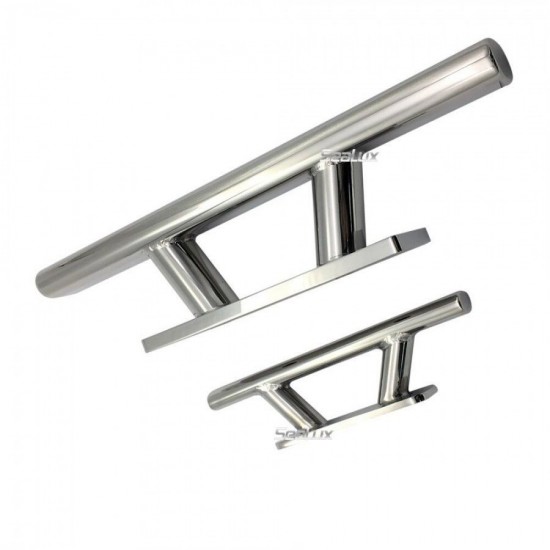
SLT Extra Large 316 Stainless Steel Oval Cleat
Old price: $228.00 Price: $205.20 Discount: 10% Save up: -$22.80Designed for secure bow rope tie-downs or deck anchoring, this extra-large... -

SLT 316 Stainless Steel Heavy-Duty Stern Fairlead Anchor Roller
Old price: $552.00 Price: $496.80 Discount: 10% Save up: -$55.20This stern fairlead anchor roller is constructed from polished 316 stainless... -

HMI 316 Stainless Steel Boat Fishing Rod Holder Rack
Old price: $138.00 Price: $124.20 Discount: 10% Save up: -$13.80Secure your gear with this premium fishing rod holder rack, crafted from... -

HMI 4-Tube 316 Stainless Steel Fishing Rod Storage Holder Rack
Price: $97.00This 4-tube fishing rod holder rack is made from 316 stainless steel for... -

HMI 316 Stainless Steel 5-Tube Adjustable Boat Fishing Rocket Launcher Rod Holder
Old price: $442.00 Price: $397.80 Discount: 10% Save up: -$44.20Optimize your boat's fishing setup with this premium 5-tube rocket launcher... -

HMI 15.75" 8 Spoke 316 Stainless Steel Boat Steering Wheel with Cap
Old price: $324.00 Price: $291.60 Discount: 10% Save up: -$32.40Upgrade your boat’s helm with this classic 8-spoke marine steering wheel,... -

HMI 13.5" 3 Spoke 316 Stainless Steel Boat Steering Wheel with Knob
Price: $167.00Upgrade your helm with this premium-grade stainless steel boat steering... -

HMI Stainless Steel Triple Adjustable Rod Holder for Boat Mounting
Price: $206.00Built for serious anglers, the HMI Triple Rod Holder delivers strength,... -

HMI 2 Pieces 316 Stainless Steel Fishing Rod Holders with Clamp
Price: $110.00This set includes two adjustable rod holders designed for boat railings with... -

SLT 316 Stainless Steel 360 Degree Swivel Clamp
Old price: $72.00 Price: $61.92 Discount: 14% Save up: -$10.08Built from polished 316 stainless steel, this 360-degree swivel clamp offers... -

HMI 12" 316L Heavy-Duty Stainless Steel Folding Bracket Set
Old price: $71.00 Price: $63.90 Discount: 10% Save up: -$7.10Optimize your space with this high-performance folding bracket set, crafted...