
Marine-Grade Stainless Steel Explained for Boat Owners
“Marine-grade stainless steel” is a useful phrase, but only when it is backed by real material and construction details. For boat owners, it should point to a known stainless steel grade, a suitable finish, clean fabrication, and hardware design that matches the fitting’s exposure and load. On its own, the phrase does not prove that a cleat, hinge, deck filler, grab handle, or rod holder is suitable for saltwater, exposed deck mounting, or long-term service.
Boat hardware faces a tougher environment than most household stainless fittings. Salt spray, wet ropes, washdown water, trapped moisture, deck vibration, cleaning products, UV exposure, and fastener movement can all affect service life. That is why stainless steel selection should go beyond a polished product photo. Grade matters, but so do surface finish, weld quality, drainage, thickness, fasteners, sealant, backing support, and inspection access.
What Marine-Grade Stainless Steel Should Mean
In marine hardware descriptions, “marine-grade stainless steel” usually refers to stainless steel selected for improved corrosion resistance in boat and coastal environments. In technical use, 316 and 316L stainless steels are commonly associated with marine-grade stainless steel for many coastal, splash-zone, and above-waterline applications. That does not make the phrase a universal guarantee.
A product description should still identify the actual grade. It should also give enough information about the finish, construction method, mounting pattern, and intended use to help the buyer decide whether the fitting belongs in a cabin, on a freshwater locker, on a saltwater deck, or in a more severe wet location.
When comparing boat hardware and accessories, treat “marine-grade” as a reason to look closer. The useful information is not the label itself, but the details behind it: grade, finish, dimensions, mounting arrangement, drainage, and whether the fitting is designed for the loads it may see on board.
Why Not Every Stainless Steel Suits Marine Use
Stainless steel is corrosion-resistant, not corrosion-proof. It relies on a passive surface layer for corrosion resistance, and that surface can be affected by chlorides, salt deposits, trapped moisture, poor drainage, surface contamination, and oxygen-limited crevices. On boats, these risks often appear around fasteners, welds, hinge barrels, cleat bases, rod holder sockets, and fittings mounted tightly against wet decks.
304 stainless steel is widely used in general applications and may be acceptable for some protected, freshwater, interior, or frequently rinsed marine uses. It should not be treated as automatically wrong for every boat. The issue is exposure. For saltwater deck hardware, where salt can concentrate as water evaporates and remain in crevices, 316 is usually the more conservative expectation.
316 stainless steel is commonly preferred for many saltwater deck fittings because it generally has better resistance to chloride-related pitting and crevice corrosion than 304. Even so, 316 and 316L are not blanket solutions for every marine environment. Permanent seawater contact, submerged fittings, stagnant water, raw-water systems, and oxygen-starved crevices may require a different material evaluation, higher-alloy stainless steel, or another suitable marine material.
Appearance Is Not Performance
A polished stainless part can look strong and durable, but shine alone does not prove material quality. A mirror finish may hide unclear alloy information, thin construction, rough hidden edges, poor weld cleanup, or a design that traps water. Buyers should separate surface appearance from engineering suitability.
Surface finish still matters. Smooth polished stainless is easier to rinse and less likely to hold salt, dirt, and surface contamination than rough or heavily marked metal. Clean mounting holes, finished edges, and smooth transitions reduce places where deposits can collect. For exposed deck hardware, this can make cleaning and inspection easier.
The better way to read a product listing is to separate each claim. “Polished” describes the finish. “316 stainless steel” describes the material grade. “Cast,” “pressed,” “machined,” or “welded” describes construction. “Base footprint,” “mounting hole spacing,” and “fastener size” affect installation. A reliable buying decision comes from all of these details together.
Fabrication, Welding, and Design Details
Two stainless steel fittings made from a similar grade can perform differently if they are fabricated differently. Rough welds, heat discoloration, grinding marks, sharp corners, embedded contamination, and tight uncleanable gaps can encourage staining or localized corrosion. Clean fabrication helps hardware drain, rinse, and remain easier to inspect.
Welded hardware deserves close attention. Weld areas can become corrosion-prone if they are rough, poorly finished, or shaped in a way that traps saltwater. This matters on grab handles, handrails, rod holders, cleats, and fabricated brackets. Good weld cleanup is not only cosmetic; it supports practical maintenance in a marine environment.
Design is just as important as grade. A hinge barrel that holds moisture, a rod holder base without drainage, or a deck fitting with a hidden crevice can stain faster than a cleaner, more open design. Mixed-metal contact also matters. Stainless hardware mounted against aluminium or other metals in a wet, salty environment should be evaluated for galvanic corrosion risk and isolated where appropriate.
Thickness, Construction, and Load
Stainless steel grade does not compensate for weak construction. A thin cleat, a lightly built hinge, or a rod holder with a small unsupported base can still be unsuitable for its job even if the alloy is appropriate. Load-bearing hardware should be evaluated as a complete system: fitting, fasteners, backing, sealant, and deck structure.
Cleats can see shock loads from mooring lines. Grab handles and handrails support people moving on wet decks. Rod holders can face leverage from trolling, current, or sudden fish strikes. Hinges can be stressed by hatch weight, wind, vibration, and repeated opening. Deck fillers need reliable cap fit, sealing surfaces, and careful installation because they protect fuel, water, or waste systems.
Before drilling, enlarging holes, or replacing hardware, inspect the mounting area carefully. Hidden wiring, fuel lines, tanks, plumbing, cored deck material, and structural elements may be below the surface. For load-bearing or safety-related hardware, use suitable marine fasteners, proper backing or reinforcement, sound deck material, and sealant appropriate for the installation. If the deck core is soft, wet, cracked, or inaccessible, professional inspection is the safer choice.
Saltwater Versus Freshwater Use
Saltwater exposure is more demanding because chloride deposits can remain on the surface after spray, washdown, or drying. Hardware under covers, behind rails, around ropes, near fishing areas, or in recesses may stay damp longer than open surfaces and may need more frequent rinsing and inspection.
Freshwater boats still need corrosion-resistant hardware. Rainwater, bilge moisture, cleaning chemicals, mud, organic residue, wet lockers, and vibration can all affect stainless fittings. The difference is that freshwater usually creates a less aggressive chloride environment than saltwater. For freshwater and protected cabin use, fitment, finish, construction, and load may matter more than choosing the most corrosion-resistant grade available.
For exposed saltwater deck fittings, a clearly stated 316 stainless steel specification is usually the more cautious expectation. For permanent seawater contact or stagnant wet service, do not assume that above-waterline deck hardware guidance applies. The environment should guide the material decision.
How to Read Product Specifications
A strong product description gives enough detail to judge fitment and suitability. A weak one relies on broad claims such as “marine-grade,” “rust resistant,” or “high quality” without explaining the material, finish, mounting, or construction. Use the table below when reviewing stainless steel hardware specifications.
| Specification Detail | Why It Matters | What to Watch For |
|---|---|---|
| Stainless steel grade | Helps indicate whether the material suits freshwater, saltwater, interior, or exposed deck use. | Descriptions that say only “stainless,” “marine-grade,” or “rust resistant.” |
| Surface finish | Smooth surfaces are easier to rinse and less likely to hold salt and dirt. | Photos that show shine but not edges, holes, welds, threads, or underside areas. |
| Construction method | Cast, pressed, machined, or welded fittings behave differently under load and vibration. | No useful information about base strength, wall thickness, welds, or stiffness. |
| Mounting dimensions | Hole spacing, base footprint, and fastener size affect replacement and installation. | No dimensions for hardware that must match an existing deck pattern. |
| Drainage and crevices | Trapped saltwater increases the risk of staining, pitting, and crevice corrosion. | Closed pockets, tight gaps, or shapes that appear to hold water. |
| Hardware purpose | Load-bearing fittings need more careful evaluation than trim or low-load accessories. | Cleats, handrails, or rod holders described only by appearance. |
Buyer Checklist for Marine-Grade Stainless Steel Hardware
Use this checklist before choosing stainless steel boat hardware, especially for exposed saltwater fittings or parts that carry load.
| Checklist Point | What to Confirm |
|---|---|
| Grade is clearly stated | Look for a named stainless grade, commonly 316 for many exposed saltwater deck fittings. |
| Use environment matches the part | Confirm whether the fitting suits saltwater, freshwater, interior, exterior, above-waterline, or more severe wet service. |
| Finish is smooth and clean | Choose surfaces that can be rinsed, wiped, and inspected without trapping deposits. |
| Fabrication appears controlled | Check for clean welds, smooth edges, neat holes, and no obvious water traps. |
| Construction suits the load | For cleats, grab handles, hinges, and rod holders, consider base area, thickness, stiffness, and backing access. |
| Mounting details are available | Confirm hole spacing, fastener needs, backing access, sealant path, and deck condition. |
| Fasteners are suitable | Use compatible marine fasteners and avoid careless mixed-metal contact where galvanic issues may occur. |
| Maintenance is realistic | Select hardware that can be cleaned, inspected, tightened, and re-bedded when needed. |
What to Look For by Hardware Type
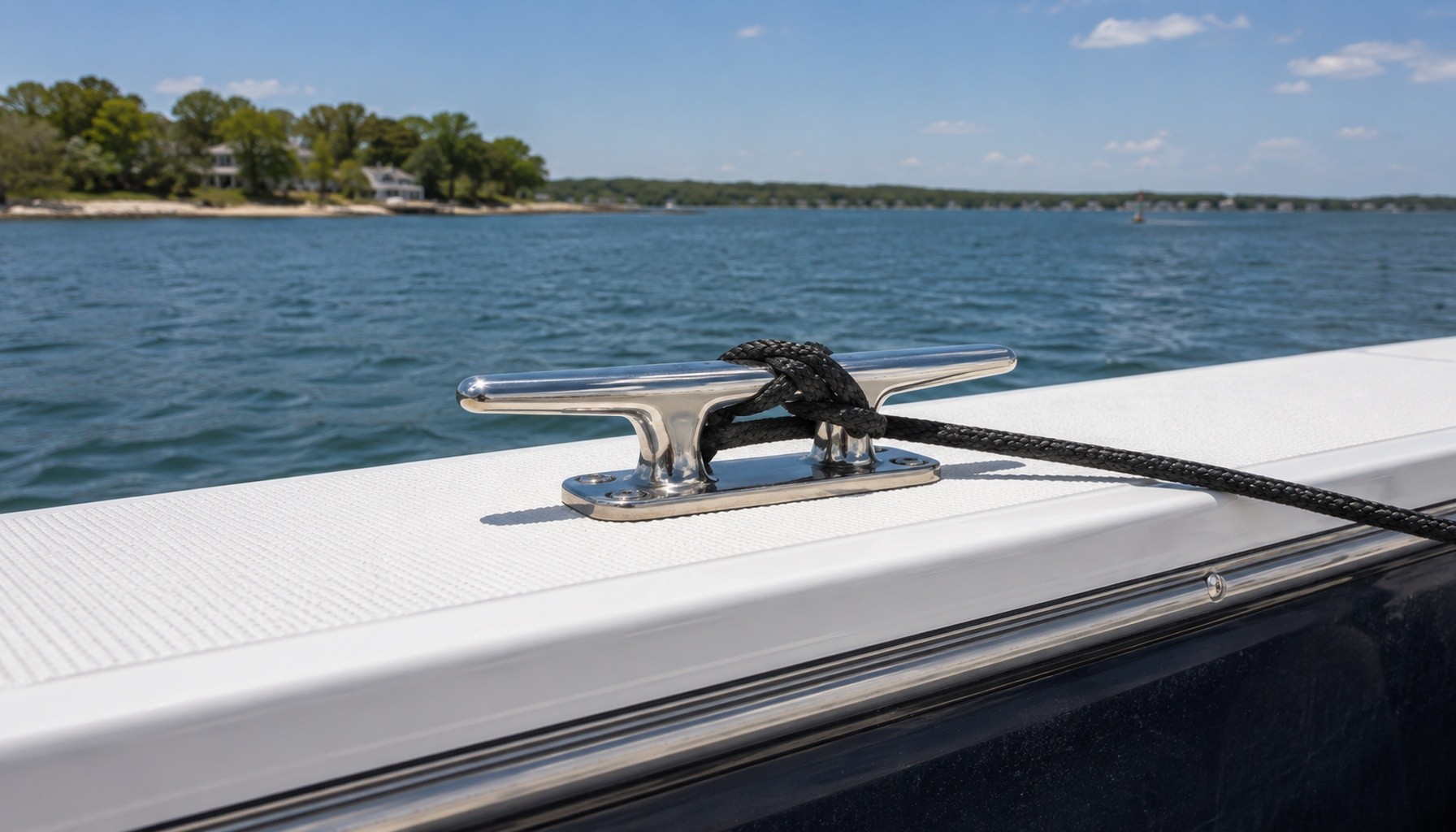
Cleats should be treated as structural deck hardware, not decorative fittings. Look at base size, fastener spacing, deck access, backing options, and core condition. Stainless grade matters, but the cleat also needs a sound mounting surface and reinforcement suitable for expected mooring loads.
Hinges should be judged by leaf thickness, pin quality, screw pattern, alignment, and whether the hinge barrel can trap moisture. For hatch and locker use, vibration and repeated opening can loosen screws if the mounting surface is weak or old holes are worn.
Deck fillers need close attention to cap fit, thread quality, sealing surface, gasket condition, labeling, bedding sealant, and hose access. Because they may connect to fuel, water, or waste systems, installation should be careful and system-specific.
Grab handles and handrails are safety-related hardware. A polished tube is not enough. Check mounting feet, fastener size, edge finish, hand clearance, backing access, and whether the surface underneath can support a person moving on a wet deck.
Rod holders should be evaluated for tube wall thickness, drainage, mounting angle, weld quality, backing support, and base area. Fishing loads can create leverage, especially during trolling or when a rod is hit hard. A neat-looking rod holder can still loosen if mounted to a thin or unsupported panel.
Common Red Flags in Vague Product Descriptions
Vague language is not always a sign of poor hardware, but it should make buyers look closer. The fewer technical details a description provides, the more important it is to check photos, dimensions, material information, and mounting requirements.
— “Marine-grade look” without a stated stainless steel grade.
— “Rust-proof” or “corrosion-proof,” because stainless steel is corrosion-resistant rather than immune to corrosion.
— “Stainless finish,” which may describe appearance rather than the actual material.
— No mounting dimensions for hardware that must replace an existing fitting.
— No close-up view of welds, edges, holes, threads, bases, or drainage points.
— Load-bearing hardware described only by shine, style, or general quality language.
— No indication of whether the part is intended for freshwater, saltwater, interior, above-waterline, or more severe wet service.
Maintenance and Inspection
Good stainless steel selection reduces risk, but it does not remove the need for care. Rinse exposed fittings with fresh water after saltwater use when practical. For routine cleaning, use mild soap or detergent, rinse with clean water, and dry the surface where practical so salt and cleaner residue do not remain in crevices.
For brushed or satin finishes, clean with the grain rather than across it. Avoid chloride-containing cleaners, concentrated bleach, hydrochloric-acid products, and carbon steel wool. Steel particles left behind by ordinary steel wool or contaminated pads can rust on the stainless surface and create misleading stains. Abrasive methods can also damage the finish and make future deposits harder to remove.
Inspect around fasteners, welds, hinge pins, deck filler caps, rod holder bases, cleat feet, and grab handle mounts. Light tea staining may be cosmetic and cleanable if caught early. Pitting, cracking, deep staining around fasteners, loose hardware, movement under load, or failed sealant should be treated more seriously.
If hardware supports people, mooring loads, fishing loads, or system sealing, do not assume visible corrosion is only cosmetic. Inspect the part, fasteners, backing, sealant, and deck material. Replacement or professional inspection may be safer when the fitting is loose, deeply pitted, cracked, distorted, or mounted on damaged structure.
FAQ
What does marine-grade stainless steel mean?
It usually means stainless steel selected for improved corrosion resistance in marine environments. In boat hardware, the phrase often points toward 316 stainless steel, but buyers should confirm the actual grade, finish, construction, and intended use.
Is marine-grade always 316 stainless steel?
No. Some descriptions use “marine-grade” loosely. For many exposed saltwater deck fittings, 316 stainless steel is commonly preferred, but the phrase itself does not guarantee that the part is 316.
Can stainless steel still rust in saltwater?
Yes. Stainless steel can develop tea staining, pitting, or crevice corrosion when salt deposits, trapped moisture, poor drainage, contamination, or oxygen-limited crevices are present. It is corrosion-resistant, not corrosion-proof.
How can I tell if boat hardware is suitable for marine use?
Check the stainless grade, surface finish, construction, mounting dimensions, drainage design, and intended environment. For load-bearing fittings, also evaluate fasteners, backing support, sealant, deck condition, and access below the mounting surface.
Is polished stainless steel better for boats?
A smooth polished finish can help because it is easier to rinse and less likely to hold deposits. Polish alone does not prove quality, so it should be considered together with grade, fabrication, weld finishing, design, and installation.
Should I replace stained stainless steel hardware?
Light surface staining may be cleanable. Replace or professionally inspect the part if staining is accompanied by pitting, cracking, loose fasteners, movement under load, sealant failure, or damage around the mounting area.
Related Nove Sea Categories
— Cleats
— Hinges
Related products
-
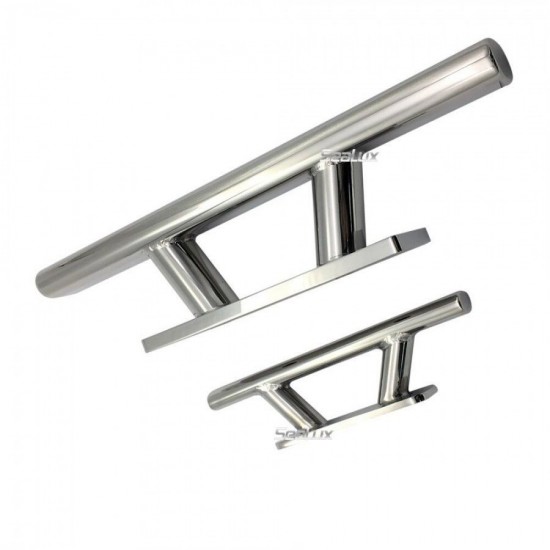
SLT Extra Large 316 Stainless Steel Oval Cleat
Old price: $228.00 Price: $205.20 Discount: 10% Save up: -$22.80Designed for secure bow rope tie-downs or deck anchoring, this extra-large... -

SLT Large 316 Stainless Steel Folding Cleat
Price: $133.00This reliable folding cleat offers durability and a polished look, perfect... -

SLT 10" 316 Stainless Steel Open-Base Cleat
Price: $165.00Crafted for strength and sleek performance, this open-base cleat is ideal for... -

HMI 6" 8" 10" 316 Stainless Steel Mooring Cleat
Price: $64.00Built for maximum strength and aesthetic appeal, this mooring cleat is... -
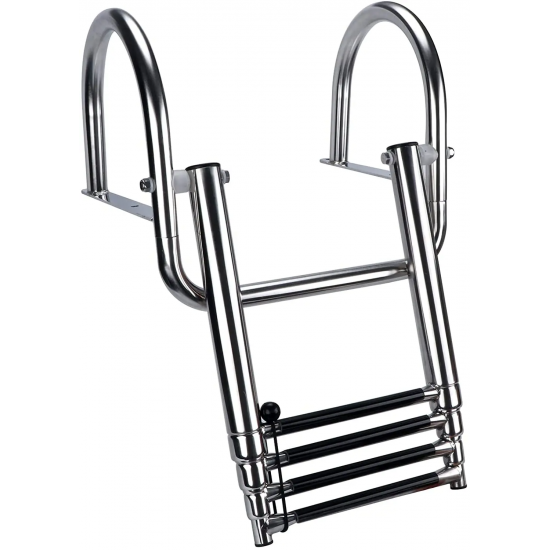
HMI 316 Stainless Steel Telescoping Boat Ladder with Handrail
Old price: $304.00 Price: $273.60 Discount: 10% Save up: -$30.40Step aboard with confidence using this premium-grade telescoping ladder,... -

HMI 2 Pieces 16" 316 Stainless Steel Boat Grab Handles
Old price: $98.00 Price: $88.20 Discount: 10% Save up: -$9.80Enhance your deck’s safety and style with this pair of 16" grab handles... -

HMI 2 Pieces 16" 316 Stainless Steel Boat Grab Handles
Price: $99.00This set includes two marine-grade grab handles crafted from durable 316... -

HMI 2 Pieces 12" Polished 316 Stainless Steel Boat Grab Handles
Old price: $92.00 Price: $82.80 Discount: 10% Save up: -$9.20Enhance onboard safety and grip comfort with this sleek, heavy-duty,... -

HMI 2 Pieces Polished 316 Stainless Steel 12" Boat Grab Handles
Old price: $108.00 Price: $97.20 Discount: 10% Save up: -$10.80Upgrade your boat’s safety and aesthetics with this premium-grade grab handle... -

HMI 2 Pieces 316 Stainless Steel Polished Boat Grab Handles
Price: $99.00This set of two grab handles is made from polished 316 stainless steel,... -

SLT 12" Stainless Steel Grab Handle
Price: $82.00A sturdy and polished grab handle designed for enhanced safety and style on... -

SLT 2 Pieces 316 Stainless Steel Take-Apart Heavy-Duty Hinge Set
Old price: $174.00 Price: $156.60 Discount: 10% Save up: -$17.40Built for strength and convenience, this set of take-apart hinges is crafted... -

SLT 2 Pieces Stainless Steel Mirror Polished Door Hinges
Price: $71.00This heavy-duty hinge set is crafted from thick-walled 304 stainless steel... -

SLT 2 Pieces Stainless Steel Mirror Polished Door Hinges
Price: $57.00These robust door hinges are made from thick-walled 304 stainless steel,... -

SLT 2 Pieces Stainless Steel Door Hinges
Price: $58.00These door hinges are made from marine-grade 304 stainless steel, offering... -
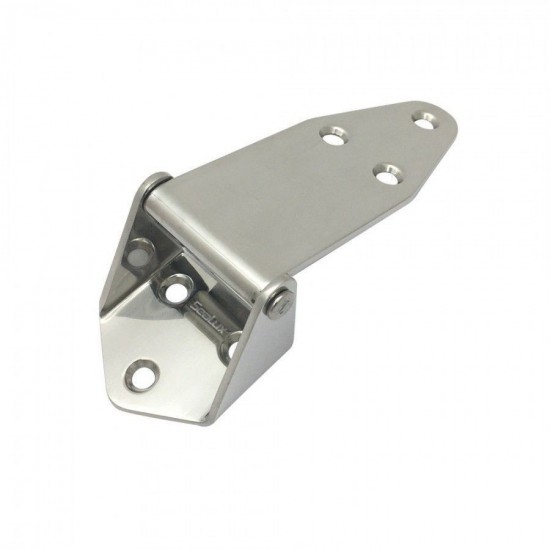
SLT Special Shape Stainless Steel Hinge
Price: $62.00This stainless steel hinge is made from marine-grade 304 material for... -

SLT 316 Stainless Steel Door 2 Pin Hinge
Price: $38.00Add strength and style to your boat or cabin doors with this 2-pin hinge,... -

SLT 2 Pieces Stainless Steel Door Hinges
Price: $41.00These polished stainless steel door hinges are made from durable 304...