
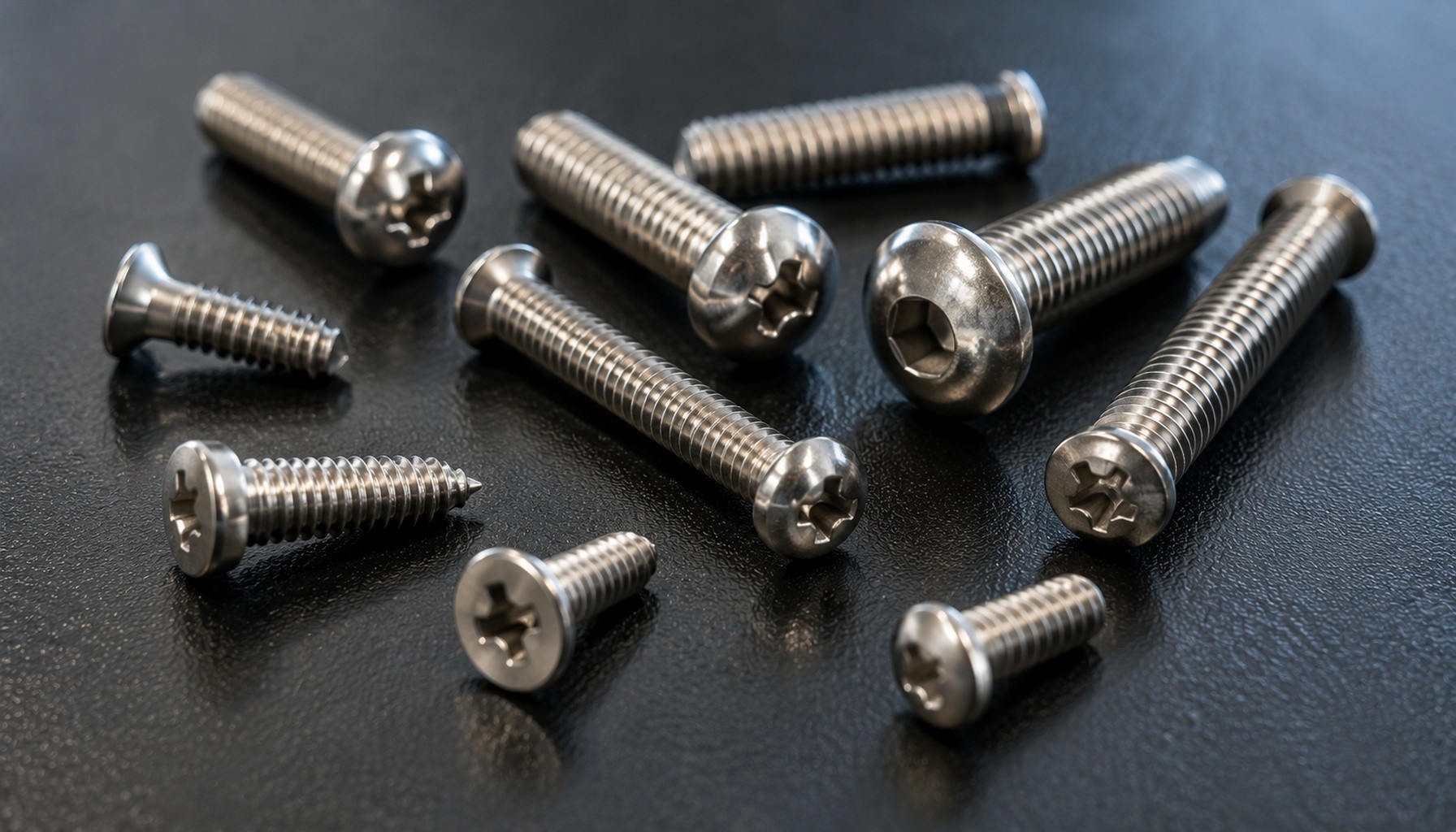
How to Choose Stainless Steel Fasteners for Boat Accessories
The fasteners behind a boat accessory often matter as much as the accessory itself. A cleat, grab handle, ladder bracket, rod holder, hinge, or deck fitting can look solid from above, but its reliability depends on the screws, bolts, washers, nuts, backing, sealant, and mounting surface underneath.
Boat hardware is exposed to vibration, deck flex, salt spray, freshwater, rain, washdowns, UV-heated surfaces, and repeated wet-dry cycles. A weak fastener choice can lead to loose fittings, water intrusion, corrosion staining, enlarged holes, cracked gelcoat, or hardware that fails under load. Choosing stainless steel fasteners for boat accessories is not about using the same screw everywhere. It is about matching the fastening method to the load, location, material, and service conditions.
Why Marine Fasteners Matter
Marine accessories rarely fail in isolation. Many problems begin at the mounting points. A rod holder may twist because the fasteners are undersized. A hinge may loosen because the old holes are worn. A handrail may flex because the backing is too small. A cleat may damage the deck because the load is concentrated under small washers instead of spread through a proper backing plate.
Fasteners have several jobs in a boat installation. They clamp the accessory to the surface, resist movement, spread load, reduce vibration-related loosening, and help maintain a sealed joint around the holes. The mounting surface also matters. Fiberglass, cored decks, aluminum panels, timber backing, plastic hatches, and molded liners all hold fasteners differently.
For general planning, broad categories such as boat hardware and accessories can help identify the type of fitting being installed, but the actual fastener choice should be based on the specific boat, location, load, and access behind the mounting area.
Screws, Bolts, and Through-Bolts
Screws and bolts are not interchangeable in every marine installation. A screw depends on its threads gripping the material it is driven into. A through-bolt passes through the accessory and mounting surface, then clamps from the underside with a nut. That difference becomes important when a fitting is loaded, vibrates, or may be used for safety.
Screws may be suitable for light-duty accessories where the surface is thick, dry, strong, and appropriate for thread engagement. Examples may include light trim, small covers, some interior accessories, or lightly loaded fittings on suitable panels. Screws are less suitable when the hardware may be pulled, twisted, stepped on, grabbed, or shock-loaded.
Through-bolting is usually the more appropriate approach for many load-bearing boat accessories. A through-bolt with washers and a lock nut creates a clamped joint rather than relying only on thread grip in the mounting surface. Adding a backing plate spreads load across a larger area and reduces the chance of pull-through, cracking, or localized crushing.
| Fastener Method | How It Holds | Suitable Use | Key Caution |
|---|---|---|---|
| Self-tapping screw | Threads cut or form grip in the mounting surface | Light-duty fittings, trim, small covers, non-structural accessories | Can strip or pull out if the surface is thin, soft, wet, or overloaded |
| Wood screw | Threads grip timber or suitable wood backing | Wood trim, selected wooden structures, cabinetry | Requires sound material and correct pilot hole preparation |
| Machine screw into tapped metal | Threads engage a tapped metal part | Metal brackets, panels, tapped plates, removable assemblies | Needs enough thread engagement and attention to metal compatibility |
| Through-bolt with nut and washers | Clamps through the accessory and mounting surface | Many deck fittings and moderately loaded accessories | Requires underside access and proper sealing |
| Through-bolt with backing plate | Clamps and spreads load over a wider area | Cleats, ladders, handrails, loaded rod holders, safety-related hardware | The backing plate must bear against a sound structure |
When Through-Bolting Is Safer Than Screws
Through-bolting is often safer when the accessory is load-bearing, safety-related, exposed to repeated vibration, or mounted into a surface that may not hold screw threads reliably. This includes many cleats, handrails, grab handles, ladders, loaded rod holders, anchor-related fittings, and deck hardware that may support a person or restrain the boat.
A screw can hold during light use but pull out when load changes direction or increases suddenly. This is a real concern on cleats, where mooring lines can load the fitting from changing angles as wind, wake, or current moves the boat. It is also important on handrails and ladders, where the load may come suddenly from a person trying to regain balance or board from the water.
Through-bolting alone does not make an unsuitable installation safe. The deck or panel must be structurally sound. The fasteners must be correctly sized for the accessory. The underside must allow washers, nuts, and backing to sit properly. If the surface is soft, wet, cracked, delaminated, or too thin for the expected load, the structure may need repair, reinforcement, or professional inspection before the accessory is installed.
304 vs 316 Stainless Steel Fasteners
Stainless steel is corrosion-resistant, not corrosion-proof. That distinction matters on boats. Stainless fasteners can still show tea staining, pitting, crevice corrosion, or galvanic corrosion depending on grade, surface finish, drainage, trapped salt, oxygen exposure, contact with other metals, and maintenance.
304 stainless steel can be suitable for some protected, interior, freshwater, or mild-exposure installations. It should not be treated as automatically wrong for every boat use. The question is whether the fastener is exposed to salt spray, standing moisture, deck washdowns, or poor drainage.
316 stainless steel is generally preferred for many exposed marine accessory fasteners, especially in saltwater or coastal environments. It is commonly chosen for deck hardware because it has better resistance to chloride-related corrosion than 304 in many above-deck applications. It still needs proper installation, cleaning, drainage, and inspection. It should not be assumed suitable for every submerged, stagnant-water, raw-water, or oxygen-limited application without material-specific evaluation.
Washers, Lock Nuts, and Backing Plates
Washers help spread clamping pressure and protect the mounting surface from damage. Without suitable washers, a nut or fastener head can crush fiberglass, plastic, timber, or thin metal. Larger washers spread load more than small washers, but they are not always enough for load-bearing hardware.
Lock nuts help resist loosening caused by vibration. Boats vibrate from engines, hull movement, wave impact, trailering, and repeated accessory use. A plain nut may loosen over time if the joint is not designed to resist movement. Nylon-insert lock nuts are common in many boat accessory installations, but they must be correctly engaged on the bolt threads. Other locking methods may be appropriate depending on temperature, exposure, serviceability, and hardware type.
Backing plates are important when load needs to be spread over a wider area. A backing plate can reduce the risk of pull-through, local cracking, crushed laminate, and stress around individual holes. For fittings such as cleats, handrails, ladders, and heavy-use rod holders, backing should be considered part of the installation rather than an optional extra.
Sealant and Hole Protection
Every hole drilled into a boat can become a leak path. Sealant around fasteners helps protect screw holes, bolt holes, bedding surfaces, and deck cores from water intrusion. It also helps prevent water from sitting under the accessory base.
Sealant does not replace mechanical strength. A fitting should be held by the correct fasteners, washers, nuts, and backing, not by adhesive strength alone unless the accessory and installation are specifically designed that way. For most deck accessories, sealant is part of water management, not the main load path.
Before drilling, check behind the mounting area for hidden wiring, fuel lines, tanks, plumbing, steering cables, deck core, and structural members. Dry-fit the accessory first. Confirm hole alignment, fastener length, washer clearance, nut access, backing plate position, and tool access. On cored decks, protect the core from moisture and compression. Water entering a core can cause hidden damage long before the surface problem becomes obvious.
Avoid trapping water around stainless fasteners. Poor drainage, wet bedding, salt deposits, and oxygen-limited crevices can encourage staining or localized corrosion. A clean, well-bedded installation that can be inspected later is usually better than a joint that hides water and cannot be checked.
Galvanic Corrosion and Metal Compatibility
Stainless steel fasteners are often installed near aluminum, bronze, plated steel, carbon steel, or other metals. In wet conditions, dissimilar metals can create galvanic corrosion risk. Saltwater increases that risk because it acts as an electrolyte.
This does not mean stainless fasteners can never be used near other metals. It means the installer should think about contact, drainage, isolation, coatings, and inspection. Stainless fasteners installed directly into aluminum fittings or panels may need suitable isolation or compounds depending on the application. Mixed-metal joints in saltwater, damp lockers, or poorly drained areas deserve particular attention.
Surface contamination is another common issue. Steel filings, dirty tools, grinding dust, or embedded particles can cause rust-colored staining on stainless steel. Clean the work area, avoid contaminating stainless parts with carbon steel debris, and inspect exposed fasteners after the first few uses or washdowns.
Maintenance for Stainless Fasteners
Stainless steel fasteners last longer when salt deposits and grime are not allowed to sit on the surface. Rinse exposed hardware with fresh water after saltwater use where practical, especially around fittings that trap spray, bait residue, sunscreen, or cleaning chemical residue.
For routine cleaning, use mild soap or detergent and clean water, then rinse well. Drying exposed stainless surfaces can improve appearance and reduce tea staining. Avoid steel wool, carbon steel brushes, abrasive cleaners, bleach, and chloride-heavy cleaners because they can damage or contaminate the stainless surface.
Stainless nuts and bolts can also gall during installation, especially when clean stainless threads are tightened quickly or under high friction. If fasteners need to be removable later, use installation practices and thread compounds that are compatible with stainless steel, the surrounding materials, and the marine environment. Tighten evenly and avoid forcing small stainless fasteners with high-speed drivers.
Fastener Selection Checklist
| Checkpoint | What to Confirm | Why It Matters |
|---|---|---|
| Accessory function | Is it cosmetic, light-duty, load-bearing, or safety-related? | Load-bearing hardware often needs through-bolts and backing. |
| Expected load | Will the fitting be pulled, twisted, stepped on, grabbed, or shock-loaded? | Fasteners must match real use, not only static weight. |
| Mounting surface | Is the surface fiberglass, cored deck, aluminum, timber, plastic, hatch panel, or reinforced pad? | Different materials hold screws and bolts differently. |
| Surface condition | Is the deck or panel dry, firm, uncracked, and structurally sound? | Fasteners cannot make a weak or wet surface reliable by themselves. |
| Underside access | Can you reach the underside for washers, nuts, and backing plates? | Through-bolting requires access and clearance. |
| Fastener grade | Is 304 or 316 stainless appropriate for the exposure? | Salt spray and exposed deck use often justify 316 stainless. |
| Fastener type | Should the installation use screws, machine screws, bolts, or through-bolts? | The holding method must match the load and substrate. |
| Head style | Does the accessory need flat, oval, pan, truss, socket, or hex head fasteners? | The wrong head can damage the fitting or reduce clamping area. |
| Fastener length | Is there enough thread engagement without bottoming out or leaving excess exposed thread? | Poor engagement can weaken the joint or interfere with nearby parts. |
| Washers | Are washers used where pressure needs to be spread? | Washers reduce crushing and surface damage. |
| Locking method | Is a lock nut or suitable anti-loosening method used? | Boat vibration can loosen plain fasteners. |
| Backing plate | Does the fitting need reinforcement behind the surface? | Backing spreads load and reduces pull-through risk. |
| Sealant | Are holes and bedding surfaces sealed correctly? | Water intrusion can damage decks, cores, and panels. |
| Metal compatibility | Will stainless contact aluminum or other dissimilar metals? | Mixed metals in wet locations can increase corrosion risk. |
| Inspection access | Can the fasteners be checked, cleaned, tightened, or replaced later? | Marine hardware should be inspected over time. |
Examples by Accessory Type
Cleats should be treated as load-bearing hardware. A cleat can experience sudden line loads from docking, wind, wake, current, or a poorly led spring line. For permanent deck cleats, through-bolts, washers, backing plates, sealant, and a sound structure are often more appropriate than screws into thin fiberglass. Hardware such as stainless steel boat cleats should be installed with the load path in mind, not just the footprint of the base.
Rod holders vary widely. A light storage holder is different from a rod holder used for trolling or heavy tackle. Side load, twisting force, mounting angle, and gunwale strength all matter. For fishing setups, rod holders and accessories should be matched with fasteners and backing suitable for the expected use.
Ladders and boarding brackets support people, often while the user is wet and the boat is moving. Dynamic loads can be higher than they appear during a dry dockside test. Through-bolting and backing are commonly important, and the swim platform, transom, or deck surface must be structurally capable.
Handrails and grab handles are safety-related fittings. People may pull on them suddenly when balance is lost. Fasteners should be selected for pull load, not only appearance. If underside access is limited, the installation deserves careful evaluation rather than simply using shorter screws.
Hinges may seem less critical, but they experience repeated movement, vibration, and sometimes misalignment. Hatch hinges, locker hinges, and access-panel hinges can loosen if holes are worn or the panel is weak. When replacing hinges, inspect the old holes and surrounding material before reinstalling new fasteners.
Inspecting and Replacing Old Fasteners
Old fasteners should be inspected whenever an accessory is loose, leaking, stained, cracked around the base, or removed for service. Look for stripped heads, damaged threads, bent shanks, pitting, rust-colored staining, crevice corrosion under washers, missing washers, enlarged holes, cracked gelcoat, crushed laminate, soft core, or signs that the accessory has been moving.
Do not assume the previous installation was correct. A boat may have been repaired with mismatched fasteners, short screws, undersized washers, or no backing at all. Repeating the old fastener choice may repeat the same weakness.
If old screws no longer tighten, the material may be stripped, wet, soft, cracked, or too thin. Installing a larger screw without fixing the substrate can make the problem worse. For load-bearing hardware, inspect the deck condition and consider proper reinforcement, through-bolting, or professional repair.
Common Fastener Mistakes
| Mistake | Why It Causes Problems | Better Approach |
|---|---|---|
| Using regular household screws | They may corrode, strip, or lack suitable strength for marine service. | Use marine-suitable fasteners matched to exposure and load. |
| Using screws for loaded hardware | Screws can pull out of thin, wet, or weakened material. | Through-bolt and back load-bearing fittings where appropriate. |
| Skipping washers | Fastener heads and nuts can crush the surface or loosen. | Use suitable washers and backing support. |
| Relying on sealant for strength | Sealant does not replace mechanical fastening. | Use sealant for bedding and water resistance only. |
| Ignoring cored decks | Water can enter the core and cause hidden damage. | Protect the core before final installation. |
| Mixing metals without thought | Galvanic corrosion risk can increase in wet areas. | Check compatibility and isolate metals where needed. |
| Reusing damaged fasteners | Pitted, stripped, or bent fasteners may not clamp reliably. | Replace questionable fasteners during service. |
FAQ
Can I use regular screws on a boat?
Regular household screws are usually not appropriate for boat accessories. They may lack suitable corrosion resistance, strength, head shape, or thread design for marine exposure. Use fasteners selected for the boat material, accessory load, location, and wet environment.
Are stainless steel screws enough for marine use?
Sometimes, but not automatically. Stainless steel screws can be suitable for light-duty fittings in the right substrate. They are not enough by themselves for many cleats, handrails, ladders, loaded rod holders, or fittings mounted into thin or cored surfaces.
When should I use bolts instead of screws?
Use bolts, especially through-bolts, when the accessory may carry load, resist movement, support a person, or experience vibration and shock. Through-bolting is often more appropriate for cleats, ladders, handrails, and heavy-use rod holders where the structure allows it.
Do I need washers or backing plates?
Washers are commonly needed to spread clamping pressure and protect the mounting surface. Backing plates are recommended for load-bearing or safety-related hardware where forces should be spread across a larger area. A backing plate must sit against sound material to be effective.
Is 316 stainless steel always better than 304?
316 stainless steel is often preferred for exposed saltwater and coastal deck hardware, but 304 stainless steel may be suitable in protected, interior, freshwater, or mild-service locations. The right choice depends on exposure, drainage, maintenance, load, and contact with other metals.
Should I replace old fasteners when replacing hardware?
Replace old fasteners if they are stripped, bent, pitted, stained, mismatched, too short, or installed into damaged holes. Also inspect the mounting surface. New hardware installed with weak old fasteners or wet holes may not be secure.
Final Thoughts
Fasteners are small parts with a large effect on boat accessory reliability. The right choice depends on the accessory, expected load, vibration, mounting surface, stainless grade, washer support, backing, sealant, maintenance, and access for future inspection.
Use screws only where the surface and load justify them. Use through-bolts, washers, lock nuts, and backing plates where safety or load demands more support. Choose stainless steel carefully, protect holes from water, avoid careless mixed-metal contact, clean salt deposits before they build up, and inspect old fasteners before reusing them. A careful fastening system protects both the accessory and the boat around it.
Related Nove Sea Categories
— Hinges
Related products
-

HMI 2 Pieces 12" Polished 316 Stainless Steel Boat Grab Handles
Old price: $92.00 Price: $82.80 Discount: 10% Save up: -$9.20Enhance onboard safety and grip comfort with this sleek, heavy-duty,... -

HMI 2 Pieces 16" 316 Stainless Steel Boat Grab Handles
Old price: $98.00 Price: $88.20 Discount: 10% Save up: -$9.80Enhance your deck’s safety and style with this pair of 16" grab handles... -

HMI 2 Pieces 16" 316 Stainless Steel Boat Grab Handles
Price: $99.00This set includes two marine-grade grab handles crafted from durable 316... -

HMI 2 Pieces Polished 316 Stainless Steel 12" Boat Grab Handles
Old price: $108.00 Price: $97.20 Discount: 10% Save up: -$10.80Upgrade your boat’s safety and aesthetics with this premium-grade grab handle... -

SLT 12" Stainless Steel Grab Handle
Price: $82.00A sturdy and polished grab handle designed for enhanced safety and style on... -

HMI 4-Step Telescoping Boat Ladder 316 Stainless Steel Inboard Rail Dock Swimming Ladder
Price: $438.00This 4-step telescoping ladder is designed for secure and convenient boarding... -

HMI 4-Step 316 Stainless Steel Telescoping Under Platform Boat Ladder
Price: $267.00This 4-step telescoping ladder is designed for secure and convenient boarding... -

HMI 4-Step 316 Stainless Steel Telescoping Boat Ladder for Marine or Yacht Platform
Price: $229.00This 4-step telescoping ladder is built from high-quality 316 stainless... -
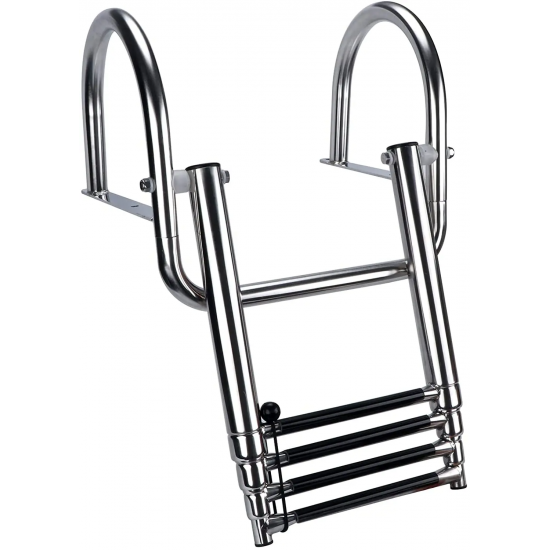
HMI 316 Stainless Steel Telescoping Boat Ladder with Handrail
Old price: $304.00 Price: $273.60 Discount: 10% Save up: -$30.40Step aboard with confidence using this premium-grade telescoping ladder,...