
Flush Mount vs Surface Mount Boat Hardware: Key Differences for Boat Owners
Flush mount and surface mount boat hardware can both be correct choices, but they are not installed the same way. The difference affects how the part looks, how much cutting may be required, how water is managed, how fasteners are supported, and how easily the hardware can be inspected or replaced later.
For boat owners choosing rod holders, drink holders, deck fillers, cleats, or general accessories, mounting style should be decided before drilling starts. A clean-looking recessed fitting can create problems if there is not enough clearance below it. A simple surface mount part can also fail early if it is poorly sealed, under-backed, or installed on a weak surface.
What Flush Mount Means
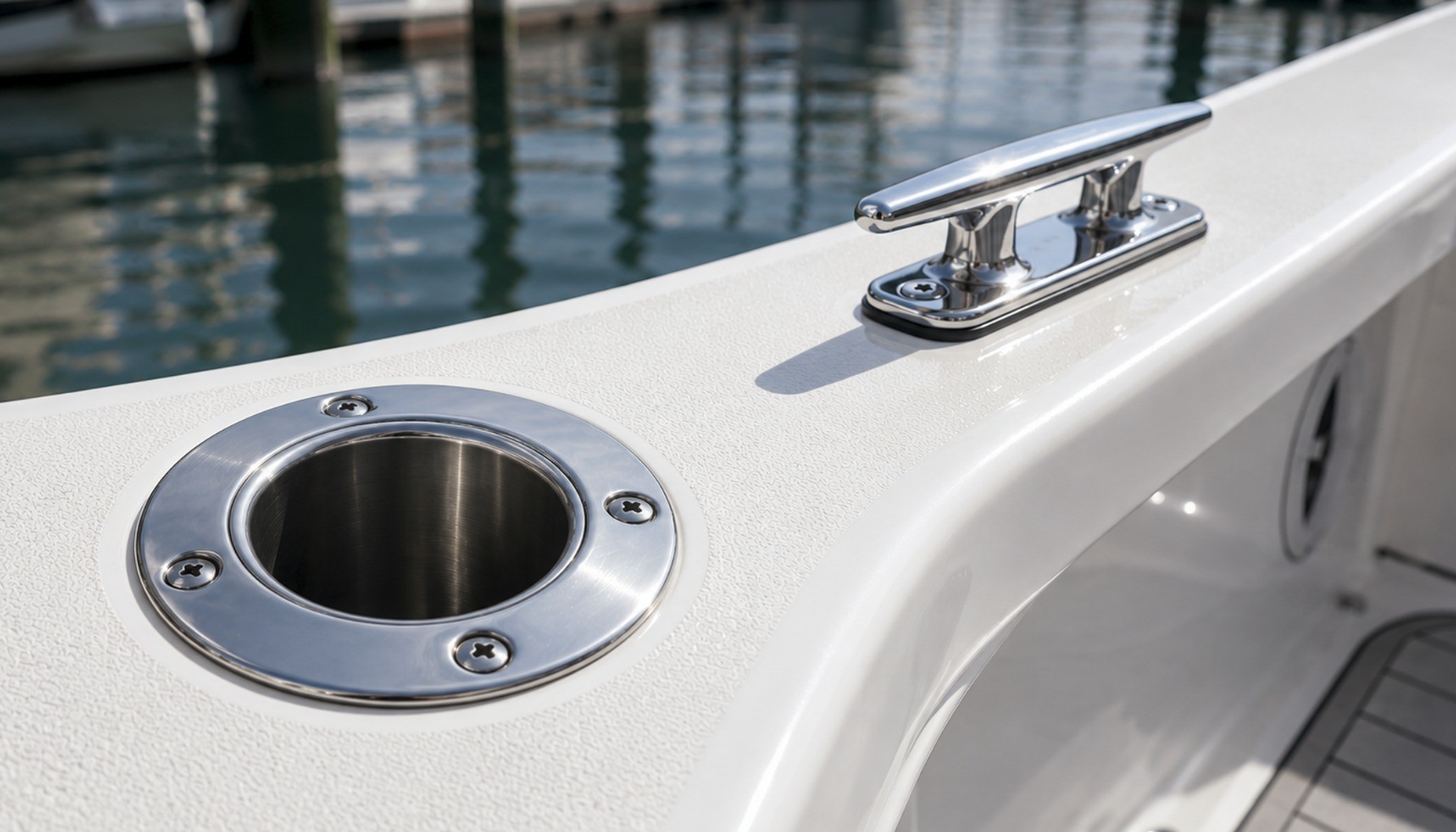
Flush mount hardware is designed to sit low on the boat surface, with the main body of the fitting recessed into the deck, gunwale, console, or panel. The visible flange or rim may sit slightly above the surface, but the part is generally more integrated than a raised bracket or external mount.
This mounting style is common for rod holders, drink holders, deck fillers, and some deck fittings where a low profile is useful. On a gunwale, a flush mount rod holder typically has a top flange while the tube drops into the space below. On a deck, a flush deck filler may sit nearly level with the surrounding surface so the cap does not create a large raised obstruction.
The important installation detail is that flush mount hardware usually needs a cut opening. That opening must match the body of the fitting, and there must be enough room below for the tube, cup, hose tail, drain fitting, cap assembly, backing hardware, or fastener length.
What Surface Mount Means
Surface mount hardware sits on top of the boat surface. Instead of dropping a large body into a cutout, the part is attached to the surface with a base, bracket, flange, or mounting foot.
This style is common for cleats, brackets, some drink holders, accessory mounts, grab handles, and many general deck fittings. Surface mount hardware often requires less cutting than flush mount hardware, although it still normally requires drilled fastener holes. Some parts may also need clearance holes for cables, drains, or small pass-through features.
Surface mounting can be practical when access below the surface is limited, when the owner wants to avoid a large cutout, or when future repositioning is likely. It does not remove the need for sealing, suitable fasteners, and backing support where load is involved.
How Each Style Sits on the Boat
The easiest way to compare the two styles is to think in side profile. Flush mount hardware sits partly inside the boat surface. Surface mount hardware sits mainly above it.
On a fishing boat, a flush mount rod holder may look tidy because only the top rim is obvious. The tube is hidden below the gunwale. A surface mount rod holder or accessory bracket is more visible because its base remains above the surface.
On a cockpit console, a flush drink holder may preserve a cleaner top surface, but it needs depth below and a sensible drainage plan. A surface mount holder may be more visible, but it can be easier to add if the console has limited internal clearance.
For deck hardware, the same logic applies. A low-profile filler, cup holder, or fitting may look integrated, while a raised surface mount accessory may be easier to see, reach, inspect, and remove.
Flush Mount vs Surface Mount Comparison
| Factor | Flush Mount Hardware | Surface Mount Hardware |
|---|---|---|
| Position on the boat | Partly recessed into the deck, gunwale, console, or panel. | Fastened on top of the mounting surface. |
| Appearance | Usually cleaner and lower profile when fitted neatly. | More visible because the base or bracket remains above the surface. |
| Installation complexity | Usually more complex because a larger cutout is often required. | Usually simpler because it often needs only fastener holes. |
| Cutting requirement | Often requires cutting into the deck, gunwale, or panel. | May avoid large cutouts, but still requires careful drilling. |
| Below-surface clearance | Critical. The recessed body needs enough space below. | Usually less demanding, but fasteners and backing still need access. |
| Drainage | Needs careful planning because recessed fittings can collect water. | Still important, especially around fasteners and base edges. |
| Backing support | Important for any fitting that carries load or sees repeated force. | Equally important for load-bearing hardware such as cleats and handholds. |
| Replacement | Replacement must closely match the old cutout, body depth, flange coverage, and fastener pattern. | Often easier to replace, although old fastener holes still need sealing or repair. |
| Common examples | Rod holders, drink holders, deck fillers, and some low-profile accessories. | Cleats, brackets, grab handles, accessory mounts, and some drink holders. |
Advantages of Flush Mount Hardware
Flush mount hardware is often chosen for its clean appearance. A recessed rod holder, drink holder, or deck filler can look more like part of the original boat layout than a later add-on.
The lower profile can also reduce snag points. In narrow side decks, casting areas, cockpit walkways, and swim areas, raised fittings can catch lines, clothing, fishing tackle, or cleaning tools. Flush mount hardware does not remove every snag risk, but it can reduce the amount of hardware projecting above the surface.
Flush mount fittings can be especially useful where the working part of the hardware benefits from being recessed. For example, many fishing layouts use recessed rod holders because the tube needs to support and angle the rod from within the gunwale. Boat owners comparing fishing layouts can review rod holders and accessories while checking tube angle, body depth, and mounting clearance.
Limitations of Flush Mount Hardware
The biggest limitation is cutting. A flush mount installation commonly requires a hole large enough for the body of the fitting. Once that hole is cut, the deck, gunwale, or panel is permanently changed unless it is later repaired or covered.
Below-surface obstructions are another serious issue. The space beneath a promising mounting location may contain wiring, fuel lines, tanks, steering cables, plumbing, flotation material, liner gaps, or structural members. Cutting without checking can damage systems that are not visible from above.
Flush mount hardware also creates more edge-sealing responsibility. If the boat has a cored deck or panel, the exposed core around the cutout needs protection from moisture. Trapped water can cause softening, swelling, rot in timber core, or delamination depending on the construction. Recessed fittings also need sensible drainage so water does not sit around the hardware or discharge into a closed void.
Replacement can be less flexible. A future fitting may have a different body diameter, flange size, fastener pattern, or cap design. If the new part does not cover the old cutout properly, the repair can become more involved than a simple swap.
Advantages of Surface Mount Hardware
Surface mount hardware is usually easier to install because it often avoids a large cut opening. The installer may only need to mark the base, confirm access below, drill fastener holes, seal the penetrations, and fasten the part with suitable hardware.
This can make surface mounting useful on small boats, older boats, aluminum boats, tenders, and utility boats where cutting into a gunwale or deck may be undesirable. It can also be useful when there is limited depth below the surface or when the owner may want to reposition the accessory later.
Surface mount hardware is often easier to inspect. The base, fasteners, and surrounding surface are visible, which helps when checking for looseness, bedding failure, corrosion staining, gelcoat cracking, or movement caused by vibration.
Limitations of Surface Mount Hardware
The main compromise is profile. Surface mount hardware stands proud of the deck, gunwale, or panel. That can be acceptable on a working area, but less desirable on a clean console, narrow side deck, or area where people move frequently.
Raised hardware can create snag and impact points. Mooring lines, fishing line, covers, clothing, and cleaning gear can catch on exposed edges. In walking areas, raised fittings should be positioned so they do not become toe-stub or trip hazards.
Surface mount hardware still needs correct sealing. Every fastener hole is a possible water path. On fiberglass, aluminum, timber, and cored composite surfaces, poorly sealed holes can allow water entry, staining, corrosion around fasteners, or gradual weakening of the mounting area.
Load-bearing surface mount hardware needs more than a neat installation. Cleats, handholds, ladders, boarding hardware, and similar fittings should be fastened into sound structure with suitable backing or reinforcement. A part can look secure from above while still being under-supported below.
Common Uses by Hardware Type
Rod holders are often flush mounted into gunwales, side decks, and transom corners when there is enough space below the surface. Surface mount rod holders or brackets may be better where adjustability is needed, where the surface is too thin for a recessed tube, or where hidden systems make cutting risky.
Drink holders may be recessed or surface mounted. A flush drink holder can keep a console or cockpit surface tidy, but it needs enough depth and a plan for spills or rainwater. Surface mounted drink holders are often easier to add later and may be more practical where the panel cannot be cut safely.
Deck fillers are commonly flush or low profile because they need to sit neatly on deck while connecting to fuel, water, or waste systems. These installations require extra care because the fitting may connect to hoses, caps, vents, tanks, and serviceable plumbing. Owners comparing filler layouts should evaluate deck fillers with attention to cap access, hose routing, sealing, labeling, and the surrounding deck structure.
Cleats are commonly surface mounted because they need a clear load path into the deck or structure. The important question is not only whether the cleat is strong, but whether the mounting surface, fasteners, and backing can handle mooring loads without flexing, leaking, or pulling loose.
General accessories vary widely. Some are designed to look integrated and low profile. Others are designed for quick installation, adjustment, or easy removal. The correct choice depends on fitment, access, exposure, drainage, load, and future serviceability.
Fitment Checks Before Drilling or Cutting
Most mounting problems can be prevented before the first hole is drilled. Product shape, surface shape, hidden structure, and access below the panel all matter.
— Check what is behind or below the mounting location, including wiring, fuel lines, tanks, plumbing, steering cables, flotation material, deck core, liners, and structural members.
— Dry fit the hardware before final drilling or cutting so the flange, base, fastener pattern, and body depth are confirmed on the actual boat surface.
— Measure the flange or base footprint to confirm it will sit flat without landing on molded curves, nonskid ridges, radius edges, seams, or old damage.
— For flush mount parts, measure body depth, body width, cap clearance, drain fittings, hose tails, rod holder tube angle, and fastener length.
— Confirm the required cutout against the actual part or manufacturer template. Do not rely only on a product photo or guess from a similar fitting.
— Check the fastener pattern and make sure holes will not land too close to an edge, previous hole, deck joint, liner void, or weakened area.
— Consider the surface angle. A cup holder, rod holder, or filler installed on a sloped gunwale may not behave the same way it would on a flat panel.
— Plan drainage before cutting. Water should not be directed into a sealed void, electrical area, storage compartment, fuel-system space, or unprotected core.
— For cleats and other load-bearing fittings, confirm that the underside allows proper backing plates, large washers, or reinforcement.
Sealant, Drainage, and Backing Support
Sealant helps control water entry around fasteners, flanges, and cut edges. It is not a substitute for a flat mounting surface, correct hole size, adequate backing, or a sound deck. The surface should be clean, dry, and suitable for the sealant being used.
Flush mount hardware needs special attention around the cutout. If the surface has core material, exposed core should be sealed before the fitting is bedded. The flange should compress evenly, and any drain path should lead to a suitable location rather than into a closed or sensitive area.
Surface mount hardware needs careful bedding around fasteners and, where appropriate, under the base. Over-tightening can squeeze out too much sealant, distort thin panels, crush core material, or crack brittle surfaces. Under-tightening can leave movement that allows leaks, vibration wear, and enlarged holes.
Backing support is essential for hardware that carries load. Cleats, handholds, ladders, boarding hardware, and rod holders used under heavy fishing loads should be treated as functional hardware, not trim. If the deck is soft, cracked, delaminated, previously repaired, or difficult to inspect from below, a qualified marine installer or surveyor should assess the mounting area before the hardware is relied on.
Maintenance and Inspection After Installation
Mounting style is not the end of the job. After installation, hardware should be inspected periodically for movement, water entry, bedding failure, cracked sealant, gelcoat cracking, loose fasteners, staining, or soft areas around the fitting.
On flush mount hardware, check that water is not collecting inside the recessed area or draining into an unsuitable space below. Cup holders, rod holders, and deck fittings exposed to spray or rain should not leave standing water against raw core, wiring, or closed cavities.
On surface mount hardware, look around the base and fasteners. Slight movement can break the bedding seal over time, especially on fittings exposed to vibration, foot traffic, mooring loads, boarding loads, or fishing loads.
If the hardware is stainless steel, treat it as corrosion-resistant, not corrosion-proof. Salt deposits, trapped moisture, oxygen-limited crevices, poor drainage, surface contamination, and mixed-metal contact can contribute to staining or localized corrosion. Freshwater rinsing, mild cleaning, and keeping surfaces free-draining can help, but cleaning should not be used to dismiss cracks, loose fasteners, pitting, or structural movement.
When to Get Professional Help
Some installations are simple enough for an experienced DIY owner, but others deserve professional inspection before cutting or drilling. The risk is higher when the part is load-bearing, the surface is cored, the underside is inaccessible, or the fitting is close to fuel, steering, electrical, or plumbing systems.
Professional help is also sensible when replacing old hardware that has leaked, moved, cracked the surrounding gelcoat, stained the deck, or left an irregular cutout. In those cases, the repair may need more than a new fitting and fresh sealant.
Deck fillers deserve particular caution because they are connected to tank systems. If a fuel, water, or waste fill is loose, leaking, mislabeled, poorly routed, or difficult to inspect, treat the job as a system installation rather than only a deck hardware swap.
Which Mounting Type Should You Choose?
Choose flush mount hardware when the cleaner profile is useful, the surface has enough depth below, the cutout can be made safely, and drainage can be managed properly. This is often suitable for rod holders, drink holders, deck fillers, and selected accessories where a recessed installation improves the layout.
Choose surface mount hardware when easier installation, lower cutting risk, easier inspection, or future repositioning matters more than a low-profile look. This is often practical for brackets, accessory mounts, some holders, and load-bearing hardware such as cleats when the installation includes proper backing.
For small boats, surface mount hardware is often the simpler starting point because internal access can be limited and cutting into flotation areas, thin molded sections, or structural features may not be desirable. Flush mount parts can still work on small boats, but only when clearance, support, sealing, and drainage are confirmed.
For broader planning, compare installation demands across boat hardware categories rather than choosing by appearance alone. Mounting style should match the boat structure and the job the hardware needs to do.
Practical Decision Guide
| Situation | Usually Consider | Why |
|---|---|---|
| You want a cleaner, lower-profile appearance. | Flush mount | It sits closer to the surface when the installation is suitable. |
| You want the easiest retrofit with minimal cutting. | Surface mount | It often requires only fastener holes and less below-surface clearance. |
| The area below the surface is crowded or inaccessible. | Surface mount | A recessed fitting may interfere with hidden systems or structure. |
| The hardware must carry mooring, boarding, or handhold loads. | Depends on structure and backing | Mounting strength depends on fasteners, backing, and deck condition, not just mounting style. |
| You are replacing an old recessed fitting. | Flush mount with matching dimensions | The new part must suit the existing cutout, flange coverage, depth, and screw pattern. |
| The fitting may need to be moved later. | Surface mount | Smaller holes are usually easier to repair than large cutouts. |
| The fitting connects to a tank or hose system. | Depends on system access | Deck fillers and similar parts must allow safe routing, sealing, inspection, and service. |
Common Mistakes to Avoid
— Choosing flush mount hardware only because it looks cleaner, without checking clearance below the deck or gunwale.
— Assuming surface mount hardware does not need sealant because it sits above the surface.
— Cutting into a deck, gunwale, or panel before checking for hidden wiring, fuel lines, tanks, plumbing, steering components, core material, or structural members.
— Installing cleats, handholds, ladders, or loaded rod holders without proper backing or reinforcement.
— Ignoring drainage around recessed fittings, especially cup holders, rod holders, and deck fittings exposed to spray or rain.
— Treating deck fillers as cosmetic fittings instead of hardware connected to hose routing, tank access, labeling, and future inspection.
— Replacing hardware without measuring the existing cutout, flange coverage, fastener pattern, body depth, and surface damage.
FAQ
Is flush mount hardware better on a boat?
Flush mount hardware is not automatically better. It usually gives a cleaner, lower-profile look, but it may require cutting, below-surface clearance, careful sealing, and drainage planning. It is better only when the location and boat structure suit the fitting.
Is surface mount hardware easier to install?
Surface mount hardware is usually easier because it often avoids a large cutout. It still needs careful drilling, sealed fastener holes, suitable fasteners, and backing support where the hardware carries load.
Do flush mount rod holders require cutting?
Most flush mount rod holders require a cut opening for the tube or body, plus fastener holes for the flange. Before cutting, check the angle, depth, underside access, drainage path, and hidden systems below the gunwale or deck.
Which mounting type is better for small boats?
Surface mount hardware is often simpler for small boats because it reduces cutting and usually needs less hidden clearance. Flush mount hardware can still work if the boat has enough depth, a sound mounting surface, proper drainage, and no conflicts below the panel.
What should I measure before choosing mount type?
Measure the base or flange footprint, required cutout, body depth, fastener spacing, surface angle, underside clearance, and available backing area. For replacement work, also measure the old hole pattern and any damaged area around the existing fitting.
Can I replace surface mount hardware with flush mount hardware?
Sometimes, but it is not a direct swap. A flush mount part may need a larger opening, more depth below the surface, and a drainage plan. Old surface mount fastener holes may also need sealing or repair before the new fitting is installed.
Related Nove Sea Categories
— Cleats
Related products
-

SLT 9" Stainless Steel Flush Mount Rod Holder with PVC Liner and Cap
Price: $99.00This fishing rod holder offers a sleek and reliable solution for securing... -

SLT 316 Stainless Steel Flush Pull Handle
Price: $49.00Crafted from premium 316 marine-grade stainless steel, this flush pull handle... -

HMI 316 Stainless Steel 90 Degree Fuel Tank Vent Flush Mount
Price: $41.00This 90-degree flush mount fuel tank vent is made from marine-grade 316... -
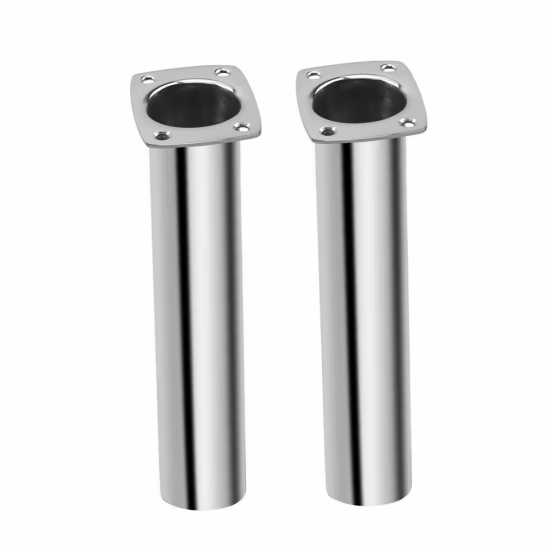
HMI 2 Pieces 316 Stainless Steel Flush Mount Fishing Rod Holders
Price: $64.00These HMI flush mount fishing rod holders are made from polished 316... -

HMI 316 Stainless Steel Flush Mount Fishing Rod Holder 15 30 or 90 Degree
Price: $38.00These flush mount fishing rod holders are crafted from premium 316 stainless... -
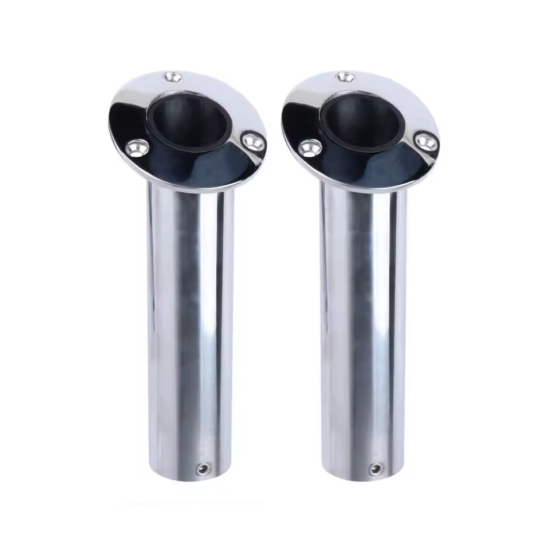
HMI 2 Pieces 316 Stainless Steel Flush Mount Fishing Rod Holders 15 30 or 90 Degree
Price: $98.00These HMI flush mount fishing rod holders are made from polished cast 316...